Choosing the right Aluminium Kitchen Handle Extrusion manufacturer in 2026 requires more than comparing prices. Kitchen hardware must look refined, feel comfortable, and remain stable through years of daily use. A poorly controlled profile can show uneven edges, weak anodizing, or inconsistent dimensions. These small defects become obvious under bright cabinet lighting. Quality matters.
This guide examines leading manufacturers through practical and verifiable criteria. The review considers extrusion precision, aluminium alloy selection, surface treatment, tooling capability, production capacity, and quality inspection. It also considers prototype support, packaging, delivery reliability, and communication during custom projects. Experienced buyers know that a polished sample does not always represent continuous production. Factory evidence matters. Product data matters more.
No single supplier suits every kitchen project. A premium furniture brand may need exact color matching and complex profiles. A distributor may prioritize stock availability and stable pricing. Some manufacturers offer excellent finishing but limited design flexibility. Others respond quickly but provide weaker documentation. That trade-off deserves attention. The best choice depends on project volume, market expectations, and installation conditions.
Reliable manufacturers should explain alloy grades, tolerance ranges, coating methods, and inspection procedures clearly. They should also provide samples that reflect real production, not only showroom pieces. Certifications can support trust, but they should be checked against the actual factory and product scope. This article highlights promising manufacturers for 2026 while recognizing that supplier performance can change. Careful verification remains essential before signing a purchase agreement.
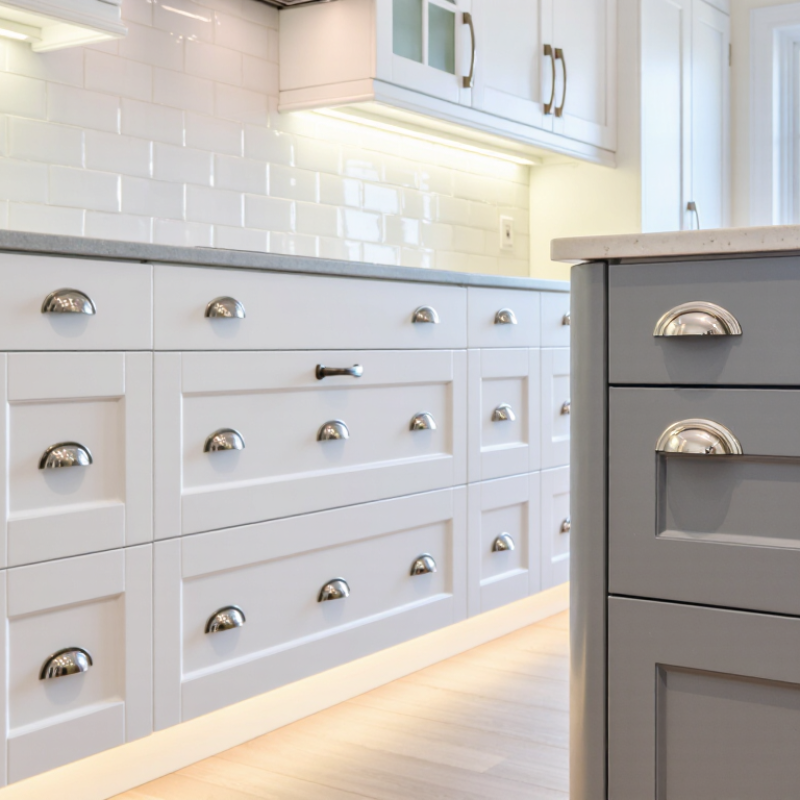
2026 Best Aluminium Kitchen Handle Extrusion Manufacturers?
What Are Aluminium Kitchen Handle Extrusions?
Aluminium kitchen handle extrusions are long profiles shaped through a steel die. Heated aluminium billets pass through the opening, forming a consistent handle section. Manufacturers then cut, deburr, drill, and finish each length for kitchen doors or drawers.
These profiles can create edge pulls, recessed handles, and slim rail designs. A typical handle may include a gripping channel, fixing cavity, and concealed screw track. That geometry matters. Weak walls can flex during daily use. Sharp internal corners may also increase stress and finishing defects.
Surface treatment changes both appearance and service life. Anodizing forms a controlled oxide layer, while powder coating adds a colored protective film. In practical inspections, check coating uniformity around corners and confirm the profile’s dimensional tolerance. A beautiful sample can still fail after repeated cleaning.
The International Aluminium Institute reports that buildings and construction represent roughly one-quarter of global aluminium demand. Kitchen hardware benefits from aluminium’s low weight and corrosion resistance. The Institute also notes that recycled aluminium requires about 5% of the energy used for primary aluminium production. That supports responsible material selection, although recycled content must be verified.
Manufacturers should provide alloy details, temper information, tolerance data, and test records. Independent checks are valuable. Reports from the International Organization for Standardization can support quality evaluation, but no certificate replaces careful sampling. Even experienced buyers sometimes overlook the fit between handle profile, cabinet panel thickness, and fastener length. That mistake is costly.

Aluminium kitchen handle extrusion is a manufacturing process in which a heated aluminium billet is pushed through a shaped die to create a continuous profile. The most common alloys for handle profiles include 6060, 6063, and 6061. The chart compares representative minimum tensile strength and proof stress values for common extrusion tempers. Actual values may vary according to wall thickness, temper, and the applicable material standard.
Reference basis: representative EN 755-2 mechanical-property values for common aluminium extrusion alloys and tempers.
Designing an aluminium kitchen handle begins with touch, not decoration. Engineers study grip diameter, edge radius, cabinet clearance, and screw placement in CAD. A rounded profile feels safer, especially when hands are wet. Yet a thicker handle may increase material use and door stress. That trade-off is often underestimated.
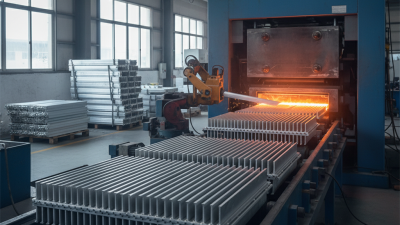
Manufacturing usually starts with an aluminium billet heated near 450–500°C. A hydraulic press forces it through a shaped steel die, creating a continuous profile. The extrusion is cooled, stretched, cut, and machined into handle lengths. Typical quality checks examine straightness, surface scratches, hole spacing, and coating thickness. Tolerances should be specified by application; one universal number can mislead buyers. Anodizing creates a hard oxide layer, while powder coating offers broader colour control. Both require clean pretreatment.
The International Aluminium Institute reports that recycled aluminium uses about 5% of the energy needed for primary aluminium production. This makes recycled content important, but only when alloy consistency remains controlled. Industry testing should also include pull-out strength, repeated loading, corrosion exposure, and coating adhesion. European Aluminium guidance supports lifecycle thinking across material selection and finishing. In practice, the best extrusion is not always the most complex one. Simple dies can reduce waste and improve consistency. Still, designers sometimes chase appearance before testing real hand comfort. That mistake deserves reconsideration.
| Evaluation Dimension | Common Industry Specification | Design or Manufacturing Relevance | Recommended Verification Point |
|---|---|---|---|
| Primary extrusion alloy | 6063 aluminium alloy, commonly supplied in T5 or T6 temper | Offers a good balance of extrudability, surface quality, corrosion resistance and anodizing performance. | Request the alloy designation, temper certificate and applicable material standard, such as ASTM B221 or EN 755. |
| Alternative alloy selection | 6061-T6 for applications requiring higher mechanical strength | May be appropriate for long handles, heavy doors or demanding load conditions, although it can be less suitable for premium decorative anodizing than 6063. | Confirm whether strength, appearance or machinability is the main design priority. |
| Typical handle profile | U-channel, tubular, recessed, edge-pull or integrated profile | Profile geometry controls grip comfort, stiffness, weight, mounting method and tooling complexity. | Review 2D drawings and 3D files for grip clearance, sharp edges, screw access and cabinet compatibility. |
| Common finished length | Approximately 100–3,000 mm before or after cutting, depending on the product design | Longer lengths can require additional control of straightness, twisting, cutting and packaging protection. | Specify cut length, allowable length tolerance and whether each piece requires deburring. |
| Typical wall thickness | Often approximately 1.0–3.0 mm for decorative kitchen-handle profiles | Thicker walls improve stiffness and thread engagement but increase material consumption and extrusion force. | Set a minimum wall thickness on the drawing and check thin-wall areas after extrusion. |
| Profile dimensional tolerance | Usually controlled according to an agreed extrusion standard and drawing tolerance; tighter tolerances may require special tooling and inspection. | Dimensional variation can affect end caps, brackets, concealed channels and cabinet installation. | Define critical dimensions separately instead of relying only on general tolerances. |
| Extrusion die development | Die design includes bearing balance, metal-flow simulation, bridge or porthole layout and trial correction. | Balanced metal flow reduces distortion, uneven wall thickness, die lines and twisting. | Ask for a die trial plan, first-article report and defined approval sample. |
| Extrusion process | Billet heating, direct extrusion, controlled cooling, stretching and cutting | Process temperature, speed and cooling influence surface quality, hardness and dimensional stability. | Check process records for billet temperature, press speed, cooling method and temper condition. |
| Straightness and twisting | Controlled through stretcher leveling, profile design, cooling uniformity and final inspection | Important for handles installed across wide drawers or used with continuous mounting rails. | Include straightness and twist limits in the purchase specification. |
| CNC machining and drilling | Cutting, drilling, tapping, milling, countersinking and end machining as required | Accurate hole position and clean edges are essential for secure mounting and visual alignment. | Specify hole spacing, diameter, depth, thread type, positional tolerance and burr limits. |
| Surface preparation | Degreasing, rinsing, etching or mechanical finishing before final coating | Preparation removes contaminants and helps produce consistent adhesion and appearance. | Confirm cleaning sequence, masking requirements and inspection criteria for visible faces. |
| Anodized finish | Clear, black, bronze and other electrolytically colored finishes; coating class should be specified. | Anodizing provides an integral aluminium oxide surface with improved wear and corrosion resistance. | Reference ISO 7599 where applicable and approve a physical color sample under defined lighting. |
| Powder-coated finish | Polyester powder coating in matte, satin or textured appearance | Allows broad color selection and can conceal minor extrusion marks when properly prepared. | Specify coating thickness, color reference, gloss level, adhesion and corrosion-resistance requirements. |
| Brushed or polished finish | Linear brushing, polishing or satin mechanical finishing before anodizing or clear coating | Creates a directional visual effect but requires consistent abrasive grade, feed speed and handling. | Define brushing direction, surface grade, allowable lines and sample approval conditions. |
| Edge and corner design | Rounded or chamfered external edges are preferred for user-contact surfaces. | Reduces sharp-edge risk, improves grip comfort and supports more consistent coating coverage. | Show minimum radii or chamfers on the engineering drawing. |
| Mounting system | Through-bolt, concealed bracket, threaded insert, clip-fit or integrated channel | The mounting method determines profile reinforcement, installation time and serviceability. | Validate pull-out strength, screw compatibility, cabinet-panel thickness and replacement access. |
| Load and durability testing | Testing should be based on the intended cabinet type, handle geometry and mounting hardware. | A visually attractive profile may still fail if the attachment points or substrate are inadequate. | Agree on static load, repeated-use, corrosion, coating adhesion and cleaning-chemical tests before production. |
| Quality-control documentation | Material certificate, first-article inspection, dimensional report, finish report and final inspection record | Documented controls improve repeatability between batches and support traceability. | Confirm inspection sampling, calibration status and nonconformance handling procedures. |
| Packaging and transport protection | Individual film or sleeve protection, separators, inner cartons and reinforced outer cartons | Anodized and powder-coated surfaces can be scratched or dented during handling even when production quality is acceptable. | Approve packaging samples and conduct a handling or transit evaluation for long profiles. |
| Sustainability indicators | Recycled-content percentage, scrap-recovery system, energy management and packaging recyclability | Aluminium is highly recyclable, but recycled content and environmental impact vary by material source and process energy. | Request verifiable recycled-content evidence, environmental certifications and recycling declarations. |
| Best supplier-selection practice for 2026 | Compare capability, quality evidence, finishing consistency, tooling support, lead time and total landed cost. | The most suitable manufacturer is determined by project requirements rather than a universal ranking. | Use the same drawing, finish sample, testing plan and commercial assumptions for every quotation. |
Note: Specifications shown are typical industry reference ranges and should be confirmed against the final engineering drawing, applicable standards and project test requirements.
Kitchen handle extrusion manufacturers now offer more than standard silver bars. Material choice affects strength, machining, and surface stability. The International Aluminium Institute reports that building applications consume roughly one-quarter of global aluminium demand. That helps explain aluminium’s popularity in modern kitchens.
6063-T5 is widely selected for smooth extrusion, clean anodizing, and moderate strength. It suits edge pulls, J-channels, Gola rails, and slim bar handles. For heavier sections, 6061 may provide better mechanical performance, although it can be less forgiving during finishing. Recycled aluminium also deserves attention. The International Aluminium Institute states that recycling uses about 5% of the energy needed for primary aluminium production. That figure is useful, but recycling claims still require verified content data.
Finishes range from brushed anodizing to matte powder coating, wood-effect coatings, and polished surfaces. Anodized layers commonly fall near 10–20 microns, depending on the specification and environment. Powder coating offers broader colour control, including warm grey and muted black, but edge damage can become visible during installation. Profiles may be hollow, solid, recessed, or custom-drawn for concealed fixing. I prefer checking die marks, corner radii, and wall thickness before comparing prices. Small details matter. A 0.5-millimetre mismatch can create uneven cabinet lines. The Global Aluminium Extrusion Market reports from Grand View Research identify construction and interior applications as major demand sectors, yet market forecasts are not a substitute for coating tests or sample assembly.
For 2026, the best aluminium kitchen handle extrusion manufacturer should offer measurable performance, not attractive promises. Evaluate alloy grade, profile accuracy, surface finish, tooling control, and delivery stability. Ask for technical drawings and a complete material specification. 6063 aluminium often suits decorative handles, but it is not universal. A sample reveals more than a brochure.
The International Aluminium Institute reports that recycled aluminium uses about 5% of the energy required for primary aluminium production. Its industry data also indicates that roughly 75% of aluminium ever produced remains in use. Therefore, ask manufacturers for recycled-content records, heat-lot traceability, and remelting controls. Do not accept vague “eco-friendly” claims. Request test evidence for coating thickness, adhesion, corrosion resistance, and colour consistency. Small differences become visible across a long cabinet run.
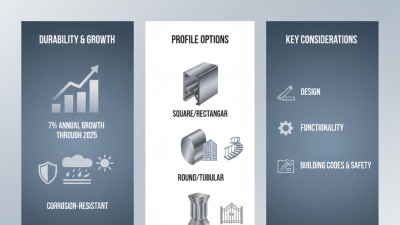
Grand View Research’s aluminium extrusion market analysis projects approximately 7% annual growth through 2030, increasing pressure on capacity and lead times. Check whether the factory owns its extrusion presses, dies, polishing, and finishing processes. Review equipment age, inspection frequency, and corrective-action records. A reliable supplier should provide tolerance data, sample approval procedures, and realistic production schedules. I would not choose the lowest quotation without checking die costs and packaging protection. One overlooked scratch can ruin an entire installation. The weak point is often communication, not machinery. Test response quality before signing.
The best aluminium kitchen handle extrusion manufacturers in 2026 will be judged by measurable performance, not factory size. They should control alloy composition, die design, wall thickness, and surface finishing in-house. A reliable supplier can provide tensile-strength results, coating records, dimensional reports, and batch traceability. These details matter when a handle must survive repeated pulling, steam, cleaning agents, and uneven cabinet installation.
Industry data supports this focus. The International Aluminium Institute reported global primary aluminium production above 70 million tonnes in 2023. This scale improves material availability, but it does not guarantee extrusion quality. European Aluminium states that recycled aluminium can require up to 95% less energy than primary production. Strong manufacturers should therefore document recycled content, energy sources, and scrap recovery practices. Sustainability claims need evidence.
Look for precision in small details. A good profile should fit cleanly against the cabinet edge, without sharp corners or visible twisting. The best producers also test anodizing thickness, powder-coat adhesion, salt-spray resistance, and color consistency between batches. Responsive engineering support is equally important when a custom die needs adjustment. Shorter lead times help, but rushed tooling can create expensive defects. No ranking is perfect. Procurement teams should compare samples, inspection reports, factory capacity, and corrective-action records before approval. References from long-term cabinet customers remain valuable, although they can be incomplete.