Aluminum Railing Extrusion is a manufacturing process that turns heated aluminum billets into precise railing profiles. The method uses pressure, heat, and a shaped steel die. A hydraulic press pushes the billet through the die. The emerging profile may look simple, but its geometry controls strength, drainage, and installation speed.
The aluminum is then cooled, stretched, cut, and often artificially aged. These steps improve dimensional stability and mechanical performance. Fabricators may add powder coating or anodizing for color and corrosion resistance. ASTM B221 provides relevant requirements for aluminum alloy extruded bars, rods, and profiles. However, ASTM compliance alone does not prove that a complete railing system is safe. Engineers must also check local building codes, load requirements, fasteners, posts, and the supporting deck.
The Aluminum Association identifies aluminum’s recyclability as a major industry advantage. Its data indicates that nearly 75% of all aluminum ever produced remains in use today. The International Aluminium Institute also projects strong long-term aluminum demand, driven partly by construction and low-carbon infrastructure. These figures support aluminum’s practical appeal, but they do not remove design responsibilities.
Small details matter. A poorly aligned die can create uneven walls. An incorrect alloy can reduce performance. A beautiful finish may hide weak connections. No profile is universally best. Good railing design balances alloy selection, wall thickness, span, drainage, coating quality, and installation conditions. This article explains how Aluminum Railing Extrusion works, where it performs well, and where its limitations deserve closer attention.
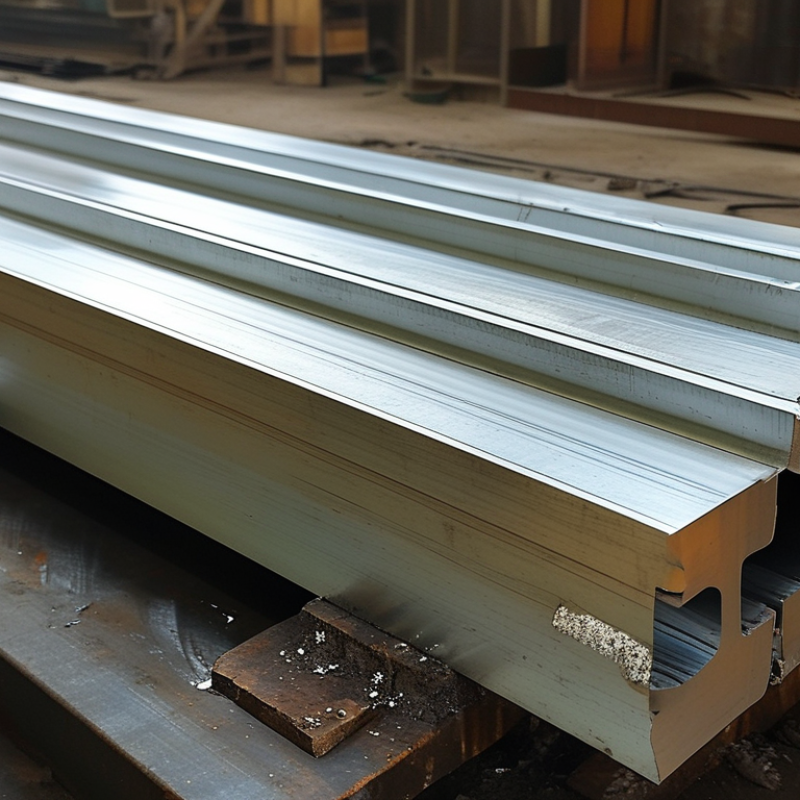
Aluminum railing extrusion is a manufacturing process and a finished profile. A heated aluminum billet is pushed through a shaped steel die. The emerging length keeps the die’s cross-section. It is then cooled, stretched, cut, and sometimes powder-coated. The International Aluminium Institute reported about 70 million metric tons of primary aluminum production worldwide in 2023. This scale supports consistent, highly engineered extrusion supply.
The basic structure usually includes posts, top rails, bottom rails, and vertical balusters. Each profile may contain hollow chambers, reinforcing ribs, drainage paths, and fastener grooves. These details reduce weight while improving stiffness. Alloy 6063 is commonly selected for architectural profiles because it balances surface quality and extrudability. However, a thinner wall is not automatically better. Load, span, wind exposure, and connection design still control performance. I have seen drawings focus on the profile but overlook the joint. That mistake deserves more attention.
Tips: Check the die drawing before production. Confirm wall thickness, corner radii, screw channels, and drainage openings. The International Aluminium Institute states that recycled aluminum can require roughly 5% of the energy used for primary production. Therefore, recycled content may reduce environmental impact, but its quality and certification should be verified. Small dimensional errors can become visible at long railing runs. Measure twice.
Aluminum railing extrusion begins with a heated billet pressed through a shaped steel die. The process creates continuous profiles with consistent dimensions. Most residential railings use 6063 aluminum because it offers smooth surfaces and reliable corrosion resistance. Higher-load components may use 6061 aluminum, which provides greater strength but usually needs more finishing work. The U.S. Geological Survey reported about 70 million metric tons of global primary aluminum production in 2023, showing the material’s significant industrial scale.
Profiles determine how a railing performs. Hollow posts reduce weight, while thicker walls improve stiffness around fasteners and base plates. Handrails often use rounded or radiused sections, making contact more comfortable. Infill channels can accept glass, cables, or vertical pickets. Small drainage paths also matter; trapped water can accelerate staining and freeze-related damage. Installation experience suggests that elegant profiles still fail when tolerances are ignored.
Surface design adds another functional layer. Powder coating creates color and helps protect the aluminum, but coating quality depends on preparation, film thickness, and exposure conditions. The International Aluminium Institute reports that recycling aluminum can save roughly 95% of the energy required for primary production. That advantage supports recycled-content specifications, although recycled alloy consistency requires control. ASTM B221 covers aluminum extrusion requirements, while architectural coating standards define performance levels. A weak assumption remains common: thicker is not always better. Poorly matched profiles can add cost, weight, and visual bulk without improving real-world safety.
Aluminum railing systems are commonly produced by forcing heated alloy billets through a shaped die. The chart compares representative mechanical properties of widely used extrusion alloys for evaluating strength, weight, and profile design.
6063 alloys are widely selected for architectural railing profiles because they provide good extrusion quality and surface finish. 6061 and 6005A generally offer higher strength, which can support slimmer or more heavily loaded profiles. Actual railing performance also depends on wall thickness, span, connections, anchorage, and local building codes.
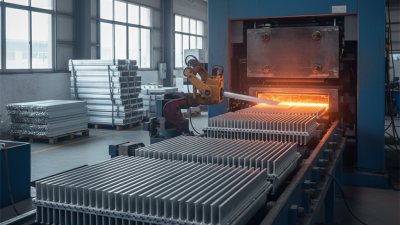
Aluminum railing extrusion begins with a solid billet, usually a cylindrical piece of aluminum alloy. The billet is heated until it becomes soft but not liquid. A hydraulic ram then pushes it through a shaped steel die. This opening controls the railing profile, including channels, grooves, and wall thickness. The metal exits continuously, much like toothpaste through a nozzle.
The profile is cooled with air or water immediately after leaving the die. Controlled cooling helps preserve its shape and mechanical properties. Workers then stretch the length slightly to remove bending and internal stress. It is cut into standard sections and may receive artificial aging for improved strength. Surface treatments, such as powder coating or anodizing, can add color and protection.
Precision matters throughout the process. A small temperature change can affect the surface, dimensions, or extrusion speed. Quality technicians inspect samples with calipers and visual checks. They may also test hardness and coating thickness. In practice, no production line is perfectly uniform. Die wear, cooling differences, or minor alloy variations can create defects. That is why experienced manufacturers review measurements regularly instead of trusting machine settings alone. A well-made extrusion should feel straight, clean, and consistent before it becomes part of a railing system.
Aluminum railing extrusion starts with a heated aluminum billet pushed through a shaped steel die. The process creates long, consistent profiles for posts, handrails, base channels, and balusters. Unlike welded sections, these profiles can include internal channels for fasteners, drainage, or reinforcement. Their uniform shape helps installers make clean, repeatable connections on site.
Assembly begins with accurate measurements of the deck edge, stair angle, and post spacing. Installers cut the extruded profiles with a fine-tooth blade, then remove sharp burrs from each end. Posts are fixed to the structure with base plates, anchors, or concealed connectors selected for the substrate. The posts must remain plumb. Small errors become obvious along the top rail.
Balusters or infill panels slide into prepared channels or attach with compact brackets. The top rail is then positioned, aligned, and secured with corrosion-resistant fasteners. On stairs, each section follows the slope rather than forcing a level connection. A practical check includes firm hand pressure, consistent gaps, and smooth transitions between sections. It is tempting to tighten every screw immediately, but leaving slight adjustment room often produces a straighter finished line. Even experienced installers can overlook thermal movement or uneven concrete, so the final inspection deserves patience.
| Category | Railing Component or Stage | Typical Specification or Data | Function in the Railing System |
|---|---|---|---|
| Material | Aluminum billet | Common wrought aluminum alloys include 6061 and 6063; alloy selection depends on strength, surface finish, and formability requirements. | Provides the metal feedstock that is heated and pressed through a shaped die. |
| Extrusion Process | Die and profile forming | A heated billet is forced through a die opening that matches the required cross-sectional profile. | Creates continuous rails, posts, channels, supports, and other repeatable sections. |
| Extrusion Process | Cooling and straightening | The emerging profile is cooled, aligned, and prepared for controlled length cutting. | Helps maintain dimensional accuracy and a straight profile for later assembly. |
| Finishing | Surface treatment | Typical options include anodizing or powder coating; the selected finish affects appearance and corrosion resistance. | Protects the aluminum surface and provides the specified architectural color or texture. |
| Main Component | Top rail or handrail | Often produced as a hollow or semi-hollow profile with a smooth, graspable outer surface. | Provides the primary hand support and connects the upper ends of posts or balusters. |
| Main Component | Posts | Vertical structural members are cut to the required height and commonly include internal channels or mounting areas. | Transfer loads from the rail and infill to the deck, floor, or supporting structure. |
| Main Component | Balusters or pickets | Slim vertical extrusions installed between the top rail and the bottom rail, shoe, or deck surface. | Forms the protective infill and helps limit the size of openings. |
| Main Component | Base shoe or bottom channel | An extruded channel may be used to support pickets, panels, or other infill at the lower edge. | Aligns and secures the lower portion of the railing infill. |
| Connection Hardware | Brackets and joiners | Corner brackets, inline connectors, and adjustable fittings are selected according to rail geometry and layout. | Joins straight runs, corners, transitions, and changes in elevation. |
| Connection Hardware | Fasteners and anchors | Mechanical fasteners and structural anchors must be compatible with the aluminum, substrate, loads, and environmental conditions. | Secures posts, brackets, rails, and infill to create a stable assembly. |
| Assembly Step 1 | Layout and measurement | Measure the run length, elevation changes, corners, openings, and available anchoring locations before cutting components. | Establishes the quantity, spacing, and cut lengths required for the railing. |
| Assembly Step 2 | Cutting and deburring | Extruded lengths are cut to size, and sharp edges or burrs are removed before fitting. | Improves fit, safety, and the appearance of exposed cut ends. |
| Assembly Step 3 | Post installation | Posts are positioned, aligned, and anchored to a structurally suitable deck, slab, stair, or other support. | Creates the primary load-bearing framework. |
| Assembly Step 4 | Rail and infill installation | Top rails, bottom channels, pickets, panels, or other infill are fitted into the prepared posts and connectors. | Completes the barrier and transfers lateral forces through the connected members. |
| Quality Check | Alignment and fastening inspection | Check plumb posts, level rails, secure fasteners, consistent spacing, finished edges, and stable connections. | Confirms that the assembled system is visually consistent and ready for code-based verification. |
| Note: Dimensions, spacing, load requirements, anchor selection, and installation methods vary by project conditions and local building regulations. The specifications shown above are general industry descriptions rather than a substitute for an engineered or code-compliant design. | |||
Aluminum railing extrusion is a manufacturing process that shapes heated aluminum through a precision die. The result is a consistent profile for posts, handrails, pickets, and support channels. These components serve balconies, stairways, decks, ramps, and commercial walkways. Profiles may be hollow, which reduces weight while preserving useful structural strength. However, not every profile suits every span or load. Project drawings and local building requirements still matter.
The main benefit is a strong strength-to-weight balance. Aluminum is easier to transport and install than many steel systems. It also resists rust, making it suitable for humid areas and coastal properties. Finishes such as anodizing or powder coating add surface protection and color stability. Maintenance is simple, but not nonexistent. Inspect fasteners, joints, drainage points, and surface damage at least twice yearly. Salt deposits can slowly attack exposed finishes. A coating may look perfect while corrosion develops beneath a damaged edge. That detail is easy to miss.