Leave Your Message

China Best Aluminum Handle Extrusions Manufacturer

Choosing a China Best Aluminum Handle Extrusions Manufacturer requires more than comparing prices. It demands evidence of alloy control, die-making skill, surface consistency, and dependable delivery. Aluminum Handle Extrusions often appear simple, yet a narrow grip, sharp corner, or uneven anodized layer can affect comfort and durability. Small details matter.

The International Aluminium Institute reports that global aluminium demand could rise by 80% by 2050, reaching about 119.5 million tonnes. This outlook increases pressure on manufacturers to improve efficiency, recycled-content management, and carbon transparency. The Aluminium Stewardship Initiative also promotes responsible sourcing, production, and material stewardship across the aluminium value chain. These reports provide useful context, but they do not replace factory-level verification. Buyers still need inspection records, alloy certificates, process samples, and realistic tolerance data.

Charles Martin Hall, an aluminium industry pioneer, stated in 1886, “The problem of making aluminum cheaply has been solved.” His confidence helped shape modern aluminium production. However, handle extrusion is more demanding than producing metal at scale. A successful supplier must translate alloy billets into precise profiles, often using 6063 or 6061 alloys, controlled extrusion temperatures, and carefully maintained dies. Surface treatments must match the intended environment.

A strong manufacturer should show ISO 9001 systems, traceable batches, and practical experience with anodizing, powder coating, machining, and packaging. Good claims need proof. Even this approach has limits; supplier audits can miss problems between production runs. Therefore, this introduction examines capability, reliability, sustainability, and the practical evidence behind China’s leading Aluminum Handle Extrusions manufacturers.
China Best Aluminum Handle Extrusions Manufacturer

Definition and Role of Aluminum Handle Extrusions

China Best Aluminum Handle Extrusions Manufacturer

Definition and Role of Aluminum Handle Extrusions

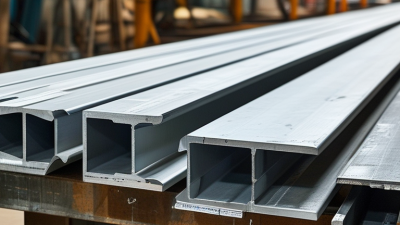
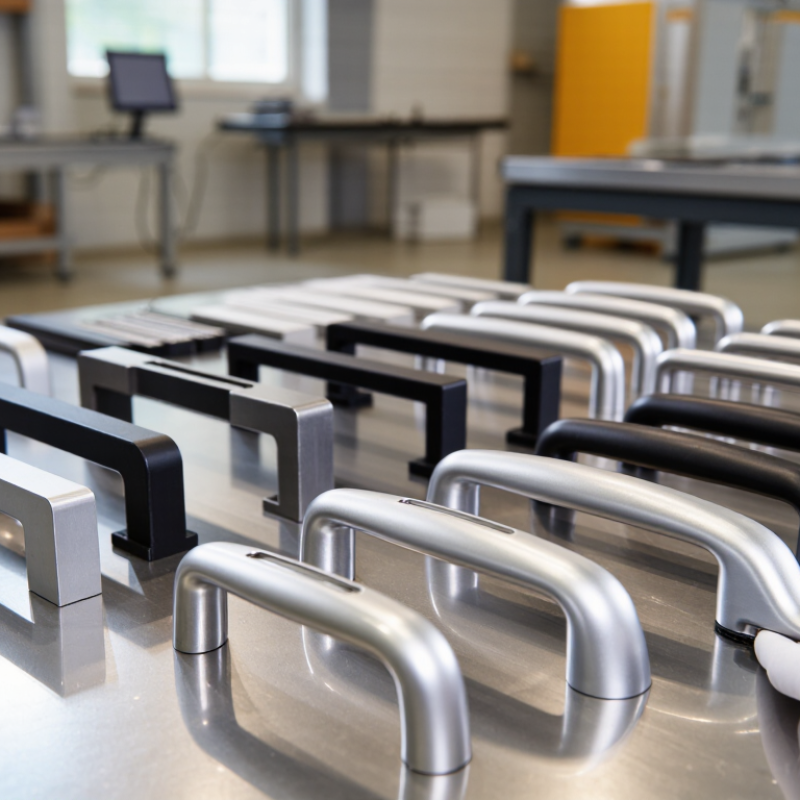
Aluminum handle extrusions are long, shaped profiles formed by pressing heated aluminum through a precision die. The die creates the handle’s cross-section, including grooves, edges, and mounting channels. After cutting, profiles may receive anodizing, powder coating, or polishing. These treatments improve appearance and help protect the surface during daily use.

In practical production, aluminum handles support doors, cabinets, drawers, equipment panels, and commercial fixtures. Their hollow or ribbed structures can reduce weight while maintaining useful stiffness. A well-designed profile feels comfortable in the hand and fits hardware accurately. Tolerance control matters here. A small dimensional error can cause gaps, difficult installation, or uneven alignment. Quality checks should include profile dimensions, surface consistency, cutting length, and coating adhesion. A perfect profile is rarely achieved without review. Even experienced teams must examine tooling wear and sample results.

Tips: Choose an alloy according to strength, weight, and finishing needs. Check the handle’s wall thickness before production. Request sample pieces for fitting tests. Inspect corners and mounting channels closely. Do not judge quality by appearance alone. That can be misleading. Reliable manufacturers should provide clear drawings, measurable tolerances, and traceable inspection records. They should also discuss design limits honestly, even when the answer is inconvenient.

Key Materials and Manufacturing Standards

China Best Aluminum Handle Extrusions Manufacturer

Key Materials and Manufacturing Standards

Aluminum handles demand more than a clean profile. In production, 6063 aluminum is often selected for its smooth surface and reliable extrusion performance. 6061 offers higher strength for heavier doors and industrial enclosures. The International Aluminium Institute reported global primary aluminum production of about 70.6 million tonnes in 2023. Its technical reports also note that recycled aluminum requires roughly 5% of the energy used for primary metal. This makes controlled billet sourcing increasingly important.

A dependable manufacturer should verify alloy chemistry, billet homogenization, die accuracy, and aging treatment. ISO 6362 defines requirements for wrought aluminum extruded products. ASTM B221/B221M provides another widely used reference for extruded bars, profiles, and tubes. In China, GB/T 5237.1 is commonly referenced for architectural aluminum profiles. Actual inspections should include tensile strength, dimensional tolerance, coating thickness, and surface defects. A perfect finish is not always the best indicator. Hidden warping can still cause installation problems.

Tips: Ask for mill certificates, batch traceability, and inspection records. Check whether samples match mass-production profiles. Confirm T5 or T6 temper before approval. Salt-spray testing may expose weak pretreatment, but it does not replace dimensional inspection. In practice, small die corrections often prevent larger assembly failures. We sometimes overlook this simple point.

China Best Aluminum Handle Extrusions Manufacturer - Key Materials and Manufacturing Standards

Data Dimension Recommended Specification Typical Technical Data Applicable Standard or Reference Manufacturing Considerations
Primary Alloy 6063 aluminum alloy Good extrudability, surface finish, and corrosion resistance ASTM B221; EN 573-3; EN 755 series Commonly selected for architectural, furniture, cabinet, and door-handle profiles.
Higher-Strength Alloy 6061 or 6005A aluminum alloy Higher mechanical strength than 6063, with moderate extrudability ASTM B221; EN 573-3; EN 755 series Suitable for handles requiring increased load resistance or structural stiffness.
Common Temper T5 or T6 T5: cooled after extrusion and artificially aged; T6: solution heat-treated and artificially aged ASTM B221; EN 515 Temper selection should be confirmed against the required strength, profile geometry, and post-processing operations.
Extrusion Process Direct hot extrusion Billet heating, die extrusion, cooling, stretching, cutting, and aging EN 755-1; EN 755-2 Die design and extrusion speed affect dimensional stability, surface quality, and profile distortion.
Profile Accuracy Standard or precision extrusion tolerance Tolerance depends on cross-section, wall thickness, circumscribing circle, and profile complexity EN 755-9; EN 12020-2 for precision profiles Critical dimensions should be identified on the approved technical drawing before die production.
Wall Thickness Design according to alloy and profile geometry Uniform walls generally improve metal flow and reduce distortion Engineering design practice; extrusion die guidelines Sharp thickness transitions and overly thin sections may increase die wear and dimensional variation.
Surface Preparation Mechanical polishing, brushing, or chemical pretreatment Removes surface defects and prepares the aluminum for anodizing or coating ISO 7599 for anodized aluminum; coating-system specifications as applicable Surface preparation should be consistent across the full production batch to maintain appearance uniformity.
Anodized Finish Sulfuric-acid anodizing Improves surface hardness, corrosion resistance, and decorative appearance ISO 7599 Color and film-thickness consistency depend on alloy composition, pretreatment, bath control, and sealing.
Powder Coating Thermoset powder coating Provides decorative color and an additional protective layer ISO 2813 for gloss measurement; ISO 2360 for non-conductive coating thickness on non-magnetic conductive substrates Coating thickness, curing temperature, adhesion, and impact resistance should be verified on finished parts.
Cutting Accuracy CNC saw cutting or precision automatic cutting Cut length controlled according to the approved drawing and tolerance class EN 755-9 or drawing-specific requirements Deburring and end-face inspection are important for safe assembly and consistent handle length.
Mechanical Inspection Tensile strength, yield strength, and elongation Values vary by alloy, temper, product form, and applicable material standard ASTM B557; ISO 6892-1 Testing should use representative samples and the exact alloy-temper designation ordered.
Dimensional Inspection Profile dimensions, wall thickness, straightness, and twist Measured using calipers, gauges, optical equipment, or coordinate measuring equipment EN 755-9; EN 12020-2 where applicable Inspection frequency should be defined for first-article approval and ongoing production control.
Surface Inspection Visual and instrumental inspection Checks for scratches, dents, die lines, color variation, pits, and coating defects Agreed inspection sample, approved reference sample, and finish specification Viewing distance, lighting conditions, and acceptance criteria should be agreed before mass production.
Quality Management Documented production and inspection controls Traceability of raw material, process parameters, inspection results, and nonconforming products ISO 9001 quality-management principles Material certificates and inspection records should be retained according to the applicable quality agreement.
Packaging and Protection Individual surface protection with secured outer packaging Protective film, paper wrapping, separators, cartons, or pallets as required Customer packaging specification and transport requirements Packaging should prevent abrasion, moisture exposure, bending, and profile-to-profile contact during shipment.
Technical values and applicable standards should be confirmed against the final alloy designation, temper, profile drawing, surface-finish specification, and destination-market requirements.

How Custom Aluminum Handle Profiles Are Produced

China Best Aluminum Handle Extrusions Manufacturer

Custom aluminum handle profiles begin with a precise drawing. The design team checks grip width, wall thickness, fixing points, and visible surfaces. Alloy selection matters too. Many handles use 6063 aluminum for its smooth finish and reliable extrusion performance. Details decide performance.

A heated aluminum billet passes through a shaped steel die under controlled pressure. The emerging profile is cooled, stretched, and cut to the required length. Experienced operators monitor temperature, speed, and dimensional changes during every run. A small deviation can affect assembly. It happens.

After extrusion, profiles may receive machining, deburring, anodizing, powder coating, or brushing. Each treatment changes appearance and surface durability. Inspection teams use calipers, gauges, and color samples to verify critical dimensions. They also check corners, holes, scratches, and uneven coating. These checks are not decorative; they protect the user’s grip and the final installation.

Custom work rarely follows a perfect path. A first trial may reveal a weak corner or excessive die marks. Engineers then adjust the die, cooling rate, or wall design. This extra iteration can feel inefficient, but it often prevents larger production problems. Reliable manufacturers keep production records, retain samples, and confirm test results before bulk manufacturing begins. A practical handle should feel stable, align cleanly, and remain consistent from one batch to the next.

Quality Control and Surface Finishing Options

China Best Aluminum Handle Extrusions Manufacturer

Quality control begins before extrusion. We verify alloy composition, billet temperature, die condition, and profile dimensions. For handle sections, even a 0.2 mm deviation can affect assembly and grip alignment. In-process gauges check wall thickness, straightness, surface lines, and cutting length. Each batch receives traceable inspection records. Small details matter.

The International Aluminium Institute reports that recycled aluminium uses about 5% of the energy required for primary aluminium production. However, recycled input can increase surface inconsistency if sorting and melting controls are weak. That point deserves more attention. Our inspection should not stop at visual checks. Hardness testing, dimensional sampling, and random destructive tests help reveal hidden weaknesses.

Finishing options include anodizing, powder coating, and electrophoretic coating. Anodizing creates a controlled oxide layer and preserves the metallic appearance. Powder coating offers broader color choices and stronger visual coverage. ISO 7599 provides guidance for decorative anodic oxidation, while ISO 9227 supports corrosion-resistance testing through salt spray methods. We also check coating thickness, adhesion, color difference, and gloss under consistent lighting. A perfect gloss is not always a better finish. For frequently touched handles, scratch resistance and edge coverage may matter more. Our process still needs regular review, especially when recycled content, new dies, or darker colors change the result.

China Best Aluminum Handle Extrusions Manufacturer - Quality Control and Surface Finishing Options

Typical dry-film or oxide-layer thickness ranges used for aluminum handle extrusion finishing. Anodizing is commonly specified by oxide thickness classes under ISO 7599, while powder and liquid coatings are controlled through coating-system specifications and measured with suitable film-thickness instruments. Actual requirements vary by application, alloy, geometry, and finish standard.

Reference framework: ISO 7599, ISO 2360, and AAMA 2603/2604/2605. Values shown are representative industry ranges, not company-specific performance data.

How to Select a Reliable Chinese Manufacturer

China Best Aluminum Handle Extrusions Manufacturer

How to Select a Reliable Chinese Manufacturer

Choosing an aluminum handle extrusion manufacturer requires more than comparing quotations. The U.S. Geological Survey’s 2024 Mineral Commodity Summaries recorded global primary aluminum production at about 70 million metric tons in 2023. This scale creates capacity, but it does not guarantee stable profiles or accurate machining. Request recent inspection records, alloy certificates, and a clear tolerance table. A serious supplier should explain die design, extrusion speed, aging treatment, anodizing thickness, and packaging methods. Ask for a production sample from the same alloy and surface finish. A polished sample proves little.

The International Aluminium Institute reports that recycled aluminum requires roughly 5% of the energy used for primary aluminum production. Therefore, review the manufacturer’s scrap separation and recycling controls. Poorly mixed scrap can affect strength, color consistency, and surface appearance. Confirm whether quality checks cover hardness, straightness, wall thickness, color difference, and pull-out strength. Factory audits also matter. Walk through the die room, extrusion line, inspection area, and warehouse when possible. Photographs can hide inconvenient details.

Tips: Compare three suppliers using one identical drawing. Check lead times against actual production records, not promises. Put inspection standards, packaging details, and defect handling into the purchase agreement. Do not rely only on a low first price. I have seen inexpensive extrusions create higher costs through rework and damaged corners. One overlooked detail remains common: handles may fit the drawing but fail during repeated installation. Test them under realistic loading before approving mass production.