Leave Your Message

China Best Aluminum T Slot Extrusion Manufacturer?

Choosing the China Best Aluminum T Slot Extrusion Manufacturer requires more than comparing catalog prices. Buyers need stable profiles, accurate dimensions, reliable surface finishes, and responsive engineering support. A strong manufacturer should explain alloy selection, die design, cutting tolerances, and quality inspection clearly.

Dr. J. Gilbert Kaufman, a respected aluminum metallurgy author, emphasizes a practical principle: “Consistent alloy selection and process control determine extrusion performance.” This principle matters when selecting Aluminum T Slot Extrusion for automation frames, machine guards, workbenches, and modular production lines. A well-made 6063-T5 profile should slide smoothly with compatible brackets. Its slot geometry should remain consistent from one batch to another. Small deviations can create visible gaps or difficult assembly.

Experience reveals the details.

Reliable suppliers usually provide material certificates, dimensional inspection records, anodizing information, and sample testing before bulk production. They should also discuss packaging. Long profiles need protection against scratches, bending, and moisture during shipment. Some manufacturers offer custom drilling, tapping, cutting, and assembly services. These options can reduce workshop labor, but they may increase lead times.

However, “best” is not always the lowest price. That assumption needs reconsideration. A cheaper profile may bring poor slot accuracy, uneven anodizing, or delayed replacements. Those problems can cost more than the original savings. This guide compares Chinese manufacturers through product quality, technical experience, customization capability, communication, and after-sales reliability. The goal is practical judgment, not a perfect-sounding supplier list. Experiences can differ, and every project still deserves sample verification before purchase.
China Best Aluminum T Slot Extrusion Manufacturer?

What Is an Aluminum T-Slot Extrusion Manufacturer?

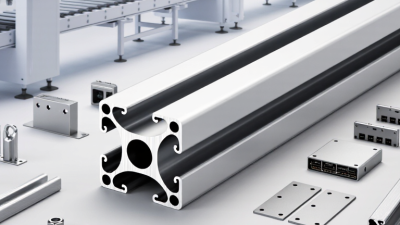
An aluminum T-slot extrusion manufacturer designs, extrudes, finishes, and verifies modular aluminum profiles. The slots accept nuts, brackets, panels, and machine accessories. This creates adjustable frames without extensive welding or drilling. A capable manufacturer controls alloy selection, die design, extrusion temperature, straightening, cutting, and dimensional inspection. Experience matters here. Small slot errors can make assembly frustrating.

Market demand is growing. Grand View Research estimates the global aluminum extrusion market reached about US$78.1 billion in 2023, with a projected 7.5% compound annual growth rate from 2024 to 2030. This growth reflects wider use in automation, construction, transport, and industrial equipment. However, market size does not prove manufacturing quality. Buyers should request tolerance data, surface-finish standards, load calculations, and sample inspection records. Ask for evidence, not polished claims.

Sustainability also belongs in the conversation. The International Aluminium Institute reports that recycled aluminum requires roughly 5% of the energy used for primary aluminum production. A responsible manufacturer should therefore explain recycled content, material traceability, and scrap handling. Yet recycled input can affect consistency if process controls are weak. That point is often overlooked. A reliable supplier shares test results, clarifies limitations, and supports prototype testing before volume production. The best choice is not always the lowest quotation. It is the manufacturer that can repeatedly produce straight, clean, dimensionally stable profiles for the intended load and environment.
How Aluminum T-Slot Profiles Are Designed and Produced in China

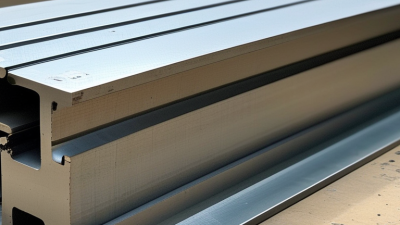
Designing aluminum T-slot profiles in China starts with the application, not the catalog. Engineers define span, payload, vibration, and connector access before drawing the slot geometry. Common 6063 alloys offer a practical balance of strength, finish, and machinability. International Aluminium Institute data shows China produced about 42 million tonnes of primary aluminum in 2023, nearly 60% of global output. That supply depth supports flexible billet sourcing, but it does not replace engineering control.

The production route is tightly sequenced. Aluminum billets are heated, then pushed through a precision steel die under controlled pressure. Profile dimensions depend on die design, extrusion speed, cooling, and stretching. A small slot error can make a fastener bind.

After cutting, manufacturers may anodize the surface for wear resistance and cleaner appearance. The Aluminum Association notes that alloy temper and dimensional tolerances must be verified separately; surface appearance alone proves little. Practical factories use calipers, optical comparators, hardness checks, and sampling plans.

The less visible work matters. Engineers should review wall thickness around corners, because thin webs can twist during extrusion. A 2024 industry report from the International Organization for Standardization also reinforces the value of documented quality systems, traceability, and corrective action. Still, inspection records can miss poor assembly behavior. A better evaluation includes trial builds, repeated loading, and profile fit checks. One drawing is not enough. Even experienced teams sometimes optimize appearance before stiffness, and that mistake deserves a second review.

Which Standards Define High-Quality T-Slot Extrusions?

High-quality T-slot extrusion starts with measurable standards, not attractive photographs. ASTM B221 defines requirements for aluminum alloy extruded bars, profiles, and tubes. It covers chemical composition, mechanical properties, and testing. In Europe, EN 755-2 addresses strength values, while EN 755-9 controls profile tolerances. EN 12020-2 is more suitable for precision extrusions with tighter dimensional demands.

Small differences matter. A slot opening that varies by 0.3 millimeters can misalign a connector or weaken a machine frame. Inspectors should check wall thickness, straightness, twist, surface defects, and alloy temper.

Common 6060 and 6063 profiles still require verified hardness and tensile results. ISO 9001:2015 supports process control, but certification alone proves little about every production batch.

The scale is significant. The International Aluminium Institute reported approximately 70.6 million tonnes of global primary aluminum production in 2023. The U.S. Geological Survey’s Mineral Commodity Summaries 2024 reported a similar global production level.

High output does not automatically mean consistent extrusion quality. A supplier should provide mill certificates, dimensional inspection records, and traceable batch numbers. Surface anodizing can look excellent while hiding poor geometry. This is where many evaluations become too optimistic.

Independent sampling remains necessary, especially for long profiles, custom slots, and load-bearing assemblies. Good standards guide the process. Careful inspection verifies reality.

How to Evaluate China’s Best Aluminum T-Slot Manufacturer

How to Evaluate China’s Best Aluminum T-Slot Manufacturer

Choosing China’s best aluminum T-slot extrusion manufacturer requires more than comparing catalog prices. A reliable evaluation begins with alloy certificates, dimensional tolerances, and production experience. Ask whether the factory controls billet sourcing, extrusion temperature, cutting, and surface treatment. These details affect slot alignment, frame strength, and assembly speed. Request recent inspection records, not polished promises. Good manufacturers can explain their testing methods clearly.

Examine sample profiles under practical conditions. Measure wall thickness with calipers, check slot dimensions, and inspect anodizing for scratches or uneven color. Build a small frame before placing a large order. It may reveal loose connectors, burrs, or difficult cuts. Review packaging, lead times, replacement procedures, and communication during a trial order. Certifications can support credibility, but they do not replace independent inspection. I would also request drawings in a controlled revision system. Confusing versions have caused avoidable mistakes in real projects.

Tips: Compare at least three suppliers using the same drawing and tolerance list. Confirm alloy grade, length accuracy, surface finish, connector compatibility, and carton protection in writing. Visit the facility when possible, or request a live video inspection. Be careful with unusually low quotes. They may hide thinner walls, weaker packaging, or unstable finishing. Leave room for honest technical questions. A supplier that admits a limitation may be more dependable than one claiming perfection.

Where Aluminum T-Slot Extrusions Are Commonly Used

Where Aluminum T-Slot Extrusions Are Commonly Used

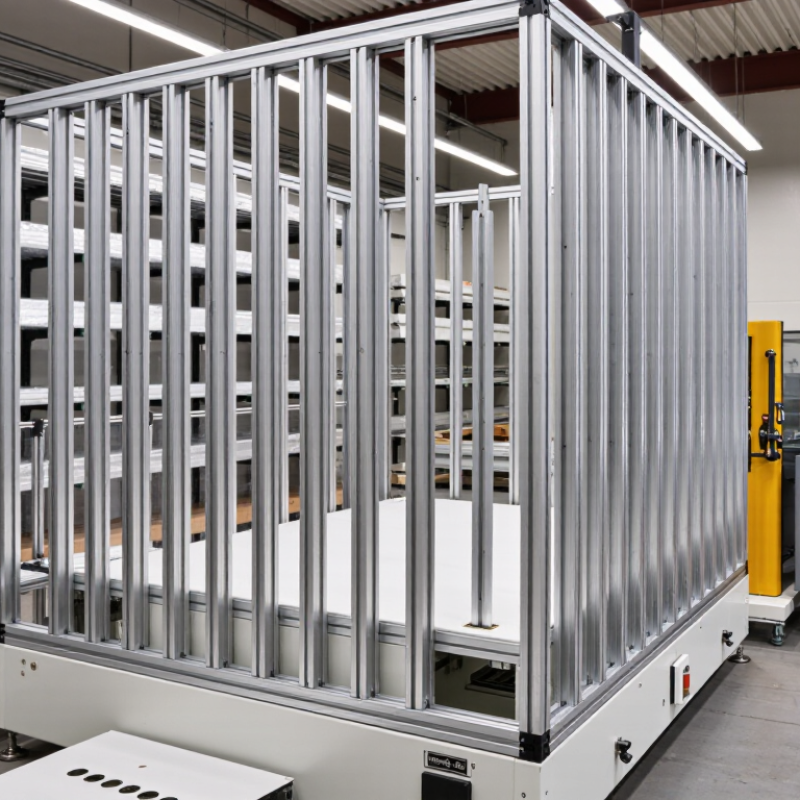
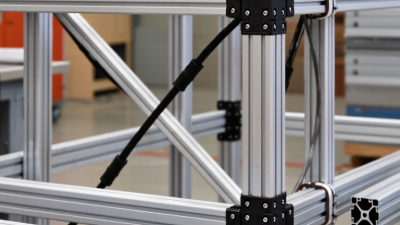
Aluminum T-slot extrusions are widely used in machine frames, workbenches, and production fixtures. Their grooved profiles accept sliding nuts, brackets, and panels without welding. This makes assembly cleaner and easier to modify on a busy workshop floor. A technician can build a guarding frame around a conveyor, then adjust its height after testing. That flexibility saves time during equipment development.

They also appear in laboratory benches, inspection stations, display structures, and automated handling systems. In robotics, extrusions support sensors, cameras, control boxes, and lightweight safety barriers. Their low weight helps installers move large structures through narrow factory aisles. For clean work areas, anodized surfaces are easy to wipe and resist ordinary workshop moisture.

However, not every profile suits heavy loads. Engineers should check span, joint strength, vibration, and the direction of applied force before selecting a section.

Experience shows that connectors often matter as much as the aluminum profile. Poorly tightened joints can shift under repeated motion. That detail is easy to overlook. Accurate cutting, square assembly, and periodic inspection improve reliability. I have also found that overbuilding a small frame can create unnecessary cost and awkward access. A better design leaves room for cables, tools, and future adjustments. Structural calculations remain important when the frame carries machinery, elevated parts, or moving equipment.