Leave Your Message

Top 10 Aluminum Frame Section Profile Types for Buyers

Choosing the right Aluminum Frame Section Profile can shape a project’s strength, appearance, cost, and installation speed. Buyers often compare profiles by shape alone, yet wall thickness, alloy grade, surface treatment, and connection design matter just as much. A narrow profile may look elegant, but it can flex under a heavy panel. A thicker section may perform better, although it can increase weight and material costs.

This guide examines ten practical aluminum frame section profile types for buyers. It considers common uses, structural behavior, finish options, machining needs, and purchasing risks. The examples reflect real selection concerns found in machinery guards, partitions, windows, display systems, solar structures, and industrial enclosures. Measurements, load conditions, and installation methods should always be checked against project drawings and supplier specifications. Small details matter.

Buyers should also verify alloy temper, dimensional tolerance, corrosion resistance, and quality documentation before placing an order. Clear drawings help prevent incorrect cuts, weak joints, and expensive replacements. Some profiles appear interchangeable but are not. That mistake is easy to make. Price comparisons can also mislead when one quotation excludes connectors, machining, packaging, or protective film.

The best profile is rarely the cheapest one. It is the section that matches the load, environment, appearance, and maintenance expectations. Still, this overview has limits. Actual performance depends on span length, fastening methods, and site conditions. Use these profile categories as a practical starting point, then confirm critical details with a qualified engineer or experienced manufacturer.
Top 10 Aluminum Frame Section Profile Types for Buyers

How Aluminum Frame Profiles Are Classified

Top 10 Aluminum Frame Section Profile Types for Buyers

How Aluminum Frame Profiles Are Classified

Aluminum frame profiles are classified by geometry, alloy, temper, surface finish, and connection method. Common shapes include T-slot, square tube, rectangular tube, angle, channel, U-section, Z-section, I-section, flat bar, and custom hollow profiles. Geometry controls stiffness, weight, and usable mounting space. A deep rectangular section usually resists bending better than a flat strip of similar weight. It is not always the cheapest choice.

Alloy and temper matter too. The 6000 series is widely used for structural extrusion because it balances strength, machinability, and corrosion resistance. Temper conditions, such as T5 or T6, affect hardness and load performance. ISO 6362 and EN 755 provide technical guidance for extruded aluminum dimensions and tolerances. According to the USGS Mineral Commodity Summaries 2024, global primary aluminum production reached about 70 million metric tons in 2023. That scale supports broad material availability, but it does not guarantee identical profile quality. Supplier inspection remains essential.

Tips: Ask for alloy, temper, wall thickness, straightness tolerance, and surface-treatment details. Check whether the profile uses T-slots, drilled holes, or welded joints. Request a dimensional report and a load calculation. Powder coating may improve appearance, while anodizing can provide a harder surface. A small mistake here can become an expensive frame problem. Classification looks tidy on paper, yet real projects often require mixed profile types.

Top 10 Aluminum Frame Section Profile Types for Buyers - How Aluminum Frame Profiles Are Classified

No. Profile Type Cross-Section Classification Typical Size Range* Typical Wall or Thickness* Main Structural Characteristic Common Joining Method Typical Applications
1 T-Slot Modular Profile Extruded hollow section with longitudinal T-slots 20 × 20 to 120 × 120 mm 1.5–5 mm nominal wall High modularity; slots allow adjustable connections and accessory mounting T-nuts, bolts, corner brackets, joining plates Machine guards, workstations, automation frames, display structures
2 Square Hollow Section Closed, four-sided box section 10 × 10 to 150 × 150 mm 0.8–6 mm nominal wall Good torsional stiffness and balanced bending resistance MIG/TIG welding, internal connectors, bolts, rivets Light structural frames, furniture, railings, equipment supports
3 Rectangular Hollow Section Closed, unequal-sided box section 20 × 10 to 200 × 100 mm 1–8 mm nominal wall Efficient directional stiffness with a low profile on one axis Welding, bolting, corner cleats, mechanical fasteners Machine bases, frames, doors, panels, transport equipment
4 Round Tube Closed circular hollow section 6–150 mm outside diameter 0.7–6 mm nominal wall Uniform resistance to torsion and bending in multiple directions Welding, tube clamps, compression fittings, swaged joints Handrails, tubular frames, bicycle components, furniture, guards
5 Equal-Leg Angle Open L-shaped section with equal legs 15 × 15 to 100 × 100 mm legs 1.5–10 mm leg thickness Efficient edge reinforcement and simple right-angle framing Bolts, rivets, welding, corner brackets Bracing, shelves, trims, cabinet frames, lightweight supports
6 Unequal-Leg Angle Open L-shaped section with unequal legs 20 × 10 to 150 × 75 mm legs 1.5–12 mm leg thickness Provides extra bearing or fixing width where space is limited Bolts, rivets, welding, structural adhesives Asymmetric supports, equipment enclosures, edge frames, brackets
7 U-Channel Open channel with one web and two flanges 20–200 mm channel depth 1.5–10 mm material thickness Good one-direction bending efficiency with accessible mounting surfaces Bolting, riveting, welding, sliding inserts Panel edges, tracks, cable covers, supports, protective framing
8 I-Beam Profile Open section with a central web and two flanges 40–300 mm overall depth 2–15 mm web or flange thickness High bending stiffness relative to material weight about the strong axis Bolted end plates, welding, plates and brackets Long spans, beams, gantries, platforms, structural support members
9 Flat Bar Solid rectangular strip section 10–300 mm width 2–30 mm thickness Simple, machinable section for plates, straps and edge members Bolts, rivets, welding, machining, adhesive bonding Clamps, mounting plates, braces, trims, reinforcement strips
10 Z-Section Open offset section with two flanges on opposite sides 20–150 mm overall depth 1.5–8 mm material thickness Offset geometry supports overlapping panels and lightweight stiffening Self-drilling screws, rivets, bolts, welding Panel framing, roof and wall systems, covers, flashing and bracing

*Size and thickness ranges are representative purchasing ranges for commonly supplied aluminum extrusions and are not universal limits. Actual availability depends on the alloy, temper, extrusion die, dimensional standard and required mechanical performance.

Top 10 Aluminum Frame Section Profile Types for Buyers

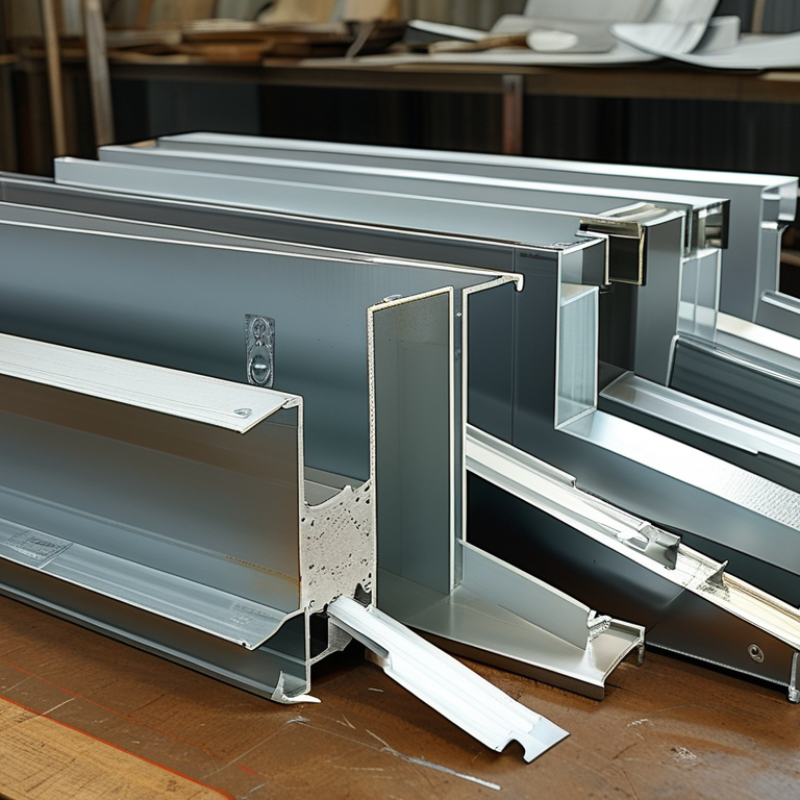
When buyers compare aluminum frame section profile types, the application should guide the choice. The top ten options include square tube, rectangular tube, round tube, T-slot, U-channel, angle, I-beam, Z-section, sliding track, and thermal-break profiles. Square and rectangular tubes suit machine guards, workbenches, and lightweight frames. Round tubes provide cleaner handrails and curved structures. T-slot profiles support adjustable assemblies with bolts and nuts. U-channels protect edges or guide panels. Angle profiles work well for brackets and corner reinforcement. I-beams carry greater loads, but they may look oversized in small projects. Z-sections help connect offset surfaces. Sliding tracks support doors and movable panels. Thermal-break profiles reduce heat transfer around windows and doors.

Do not judge a profile by appearance alone. Check alloy, temper, wall thickness, straightness, and surface treatment. A thicker wall usually improves stiffness, yet it also increases weight and cost. Measure the expected load, span, fastener position, and exposure to moisture before ordering. In practical workshop use, poorly placed fasteners often cause more trouble than a slightly smaller profile. I have also seen buyers choose complex channels when a simple tube would work better. That choice wastes material. Confirm cutting tolerances and corner alignment with the supplier. Ask for technical drawings and test data when safety matters. Small sample testing remains useful, because catalog descriptions cannot reveal every bending, sliding, or assembly issue.

Top 10 Aluminum Frame Section Profile Types for Buyers

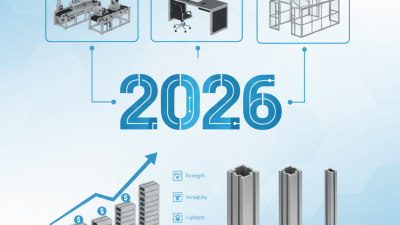
Representative section sizes commonly specified for aluminum framing, fabrication, enclosures, and structural assemblies. Actual dimensions and wall thicknesses vary by application and supplier.

Buying note: T-slot and square profiles are widely used for modular frames, while channels, angles, tubes, and heat-sink sections are selected according to load, enclosure, joining, or thermal-management requirements.

Key Specifications for Comparing Aluminum Profiles

Top 10 Aluminum Frame Section Profile Types for Buyers

Key Specifications for Comparing Aluminum Profiles

Aluminum profiles include T-slot, square, rectangular, U-channel, angle, round, sliding-track, heat-sink, conveyor, and door-frame sections. Each type serves a different load, assembly, or finishing requirement. Before choosing, check the alloy, temper, wall thickness, and cross-sectional dimensions. Common engineering choices include 6063-T5 for clean extrusion surfaces and 6061-T6 for higher structural strength. However, alloy labels alone do not prove suitability.

Measure profile width, height, internal cavity size, and hole alignment carefully. A thicker wall is not automatically better. It may increase weight without improving the joint. Review dimensional tolerances, straightness, twist, and cut-length accuracy. These details affect whether brackets meet cleanly. I have seen small tolerance errors create visible gaps in assembled frames.

Surface treatment also deserves attention. Anodizing can improve appearance and surface durability, while powder coating offers wider color options. Ask for coating thickness, color consistency, and corrosion-test information. For outdoor frames, examine drainage paths and galvanic corrosion risks around steel fasteners.

Load tables should state span, support spacing, deflection limits, and fastening conditions. Do not rely only on a supplier’s maximum load figure. It may assume ideal installation.

A practical comparison should include price, weight per meter, machining cost, lead time, and available accessories. Sometimes the cheapest section becomes expensive after drilling, cutting, and rework.

How to Select Profiles for Different Project Requirements

Top 10 Aluminum Frame Section Profile Types for Buyers

Selecting aluminum profiles starts with the project, not the catalog. The top ten options include square tubes, rectangular tubes, round tubes, angle sections, U-channels, T-slots, I-beams, sliding tracks, curtain-wall mullions, and heat-sink sections. Square tubes suit clean machine frames and light partitions. Rectangular tubes offer better stiffness in one direction. Round profiles work well for handrails and curved structures. T-slot profiles support adjustable workstations and modular equipment.

Check the load, span, connection method, and installation environment. A long warehouse partition may need thicker rectangular sections, while a compact display frame can use lighter square profiles. For outdoor use, review drainage, surface treatment, and contact with other metals. In humid areas, trapped water can cause hidden corrosion. Small details matter. Ask for measured wall thickness, alloy information, and dimensional tolerances before ordering. Extrusion length also affects transport and cutting waste.

From practical frame assembly, joint design often controls performance more than profile size. A strong section can still move when brackets are weak or poorly aligned. I once selected a profile by appearance and underestimated deflection across a wide opening. The correction required extra supports. That mistake was avoidable. Engineers should compare bending data, fastener access, and replacement needs during the design stage. Load calculations should be checked by a qualified professional, especially for public structures, elevated frames, and safety-related applications.

Common Buying and Quality-Checking Considerations

Top 10 aluminum frame section profiles include T-slot, rectangular, square, U-channel, L-angle, I-section, round tube, sliding-track, heat-break, and custom hollow profiles. Each suits a different load, connection method, or enclosure design. According to the International Aluminium Institute’s 2024 statistics, global primary aluminum production reached about 70.6 million tonnes in 2023. That scale does not guarantee consistent quality. Buyers still need evidence from each supplier.

Request the alloy grade, temper, dimensional tolerance, and surface-treatment specification. Common structural choices include 6061-T6 and 6063-T5, but the correct grade depends on strength and extrusion complexity. Check wall thickness at several points with a micrometer. A caliper reading from one end is not enough.

Inspect corners for tearing, twist, die lines, and uneven anodizing. Ask for mill certificates and batch traceability. ASTM B221 and EN 755 provide useful reference points for extruded aluminum dimensions and mechanical properties.

I would also test a sample assembly before ordering. Profiles may fit individually yet fail when connected. One practical weakness remains: visual inspection can miss internal stress or hidden porosity. Independent testing is safer for critical frames, especially when load, vibration, or outdoor exposure matters.