Leave Your Message

China Top Extruded Aluminum T Slot Profile Supplier

China has become a major manufacturing base for aluminum extrusion, supported by strong smelting, tooling, and fabrication capacity. The U.S. Geological Survey’s Mineral Commodity Summaries 2024 identifies China as the world’s leading aluminum producer. This position supports competitive sourcing for industrial framing components.

An Extruded Aluminum T Slot Profile combines lightweight strength with flexible assembly. Its continuous slots accept nuts, brackets, panels, and sensors without repeated drilling. That matters on factory floors, where machine guards, conveyor frames, workstations, and inspection systems often change during production. Reports from the International Aluminium Institute highlight aluminum’s role in lightweighting and circular manufacturing. However, market growth alone does not prove supplier quality. That distinction deserves attention.

A reliable Chinese supplier should demonstrate alloy control, extrusion consistency, dimensional inspection, and traceable documentation. Common alloys such as 6063-T5 and 6061-T6 offer different balances of finish, strength, and machinability. Surface treatments also matter. Anodizing should remain even around slot edges and cut faces. Poor tolerances can make a supposedly modular frame difficult to square.

Industry studies from Grand View Research and MarketsandMarkets show continuing demand for modular automation and lightweight structural systems. Their forecasts are useful, but forecasts are not guarantees. Buyers should verify samples, test reports, packaging methods, and production experience before placing large orders. ISO 9001 certification can support process reliability, yet it should not replace direct inspection. The best sourcing decision combines published data with practical evidence: clean profiles, accurate cuts, secure packaging, and responsive technical support. Even experienced buyers can overlook one detail. That is where careful supplier evaluation begins.

China Top Extruded Aluminum T Slot Profile Supplier

Definition and Features of Extruded Aluminum T Slot Profiles

China Top Extruded Aluminum T Slot Profile Supplier

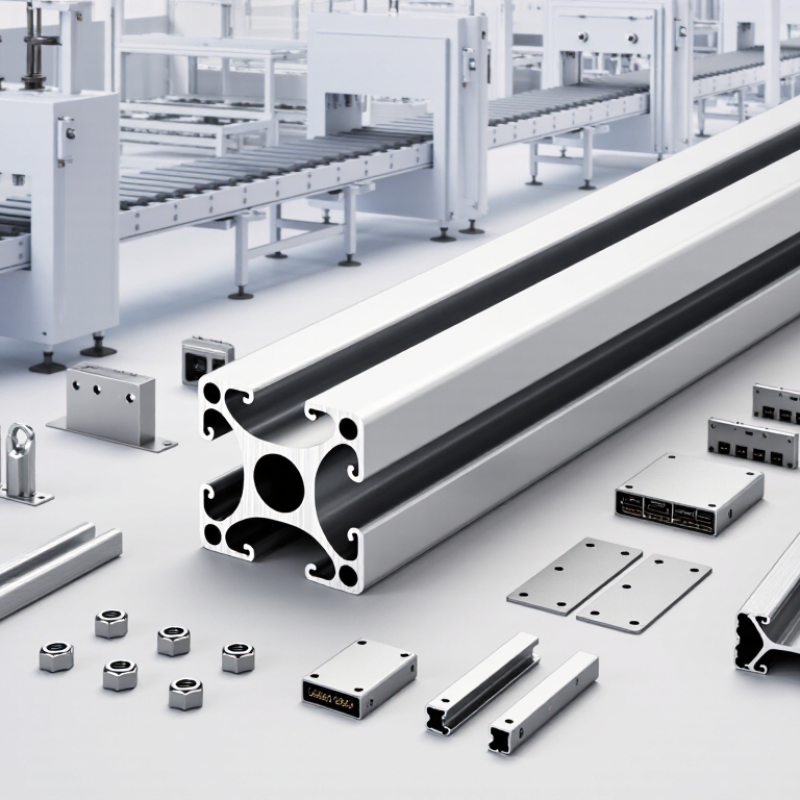
An extruded aluminum T slot profile is a structural section with continuous T-shaped channels. These slots accept nuts, bolts, brackets, panels, and sensors without drilling. The result is a modular frame that can be assembled, adjusted, and reused. Common alloys balance strength, weight, and corrosion resistance. Surface anodizing can improve appearance and reduce handling marks.

The International Aluminium Institute reported approximately 70.6 million tonnes of primary aluminum production in 2023. This scale supports stable material availability, but it does not guarantee consistent profile quality. Extrusion temperature, die condition, cooling, and straightening affect dimensional accuracy. A small twist may become obvious when a long machine frame is assembled. That detail is easy to miss.

A 2024 Grand View Research report estimated the global aluminum extrusion market at about USD 88.6 billion in 2023. It also projected strong growth through 2030, driven by construction, transportation, and industrial equipment. T slot profiles fit this trend because they reduce welding and simplify future modifications. On a workshop floor, that means fewer sparks, shorter adjustments, and cleaner assembly. Still, not every profile needs maximum wall thickness. Overdesign adds weight and cost, while undersizing creates vibration. Perfect on paper, less perfect on the workbench. Careful load checks remain necessary.

Materials, Alloys, and Manufacturing Processes

China’s extruded aluminum T slot profile suppliers use different materials for different structural demands. Alloy 6063 is common because it extrudes smoothly and produces clean slot edges. It also accepts anodizing well. Alloy 6061 offers higher strength, but it can require more careful die design and machining.

Temper matters too. T5 profiles are cooled and artificially aged after extrusion. T6 treatment provides greater hardness through additional heat treatment. However, stronger is not always better. A heavy frame may need 6061-T6, while a display structure may perform well with 6063-T5. Engineers should check load, span, slot size, and connection method before choosing an alloy.

Manufacturing quality begins with consistent aluminum billets and accurate extrusion dies. After extrusion, suppliers may straighten, cut, drill, machine, anodize, or powder-coat the profiles. Reliable factories inspect dimensions, surface defects, hardness, and coating thickness. Ask for inspection records and sample measurements. Small slot distortions can create large assembly problems. This is easy to overlook. I have seen polished samples hide uneven wall thickness, so sample approval should include a cut section and actual assembly test.

Tips: Confirm alloy and temper in writing. Request tolerance data, coating specifications, and a sample before mass production. Evaluate the finished profile, not only the catalog image.

Profile Sizes, Shapes, and Structural Configurations

China Top Extruded Aluminum T Slot Profile Supplier

Profile sizes define strength, weight, and assembly flexibility. Common sections include 20×20, 30×30, 40×40, and 45×45 mm. Larger profiles support longer spans and heavier equipment. Smaller profiles suit guards, display frames, and light automation. Wall thickness also matters. Two profiles with identical dimensions may carry different loads.

Shapes influence both appearance and performance. Square profiles provide balanced connections on every side. Rectangular sections improve stiffness in one direction. Corner profiles create clean right-angle frames. Sliding-door profiles can reduce visible hardware. Structural configurations may include single-slot, double-slot, or multi-slot designs. Engineers often combine standard profiles with gussets, joining plates, and adjustable feet. A neat drawing can still fail if bolt access is ignored.

Tips: Check the load, span, and expected vibration before choosing a size. Confirm slot dimensions with your fasteners. Protect cut ends from sharp burrs. Ask for dimensional tolerance data and sample inspection records. In practical projects, selecting the heaviest profile is not always best. It can increase cost and assembly effort. I have also seen attractive frames flex because the joint layout was underestimated. Review the structure as a complete system, not as separate aluminum bars.

Applications Across Industrial and Commercial Sectors

China Top Extruded Aluminum T Slot Profile Supplier: Applications Across Industrial and Commercial Sectors

T slot profiles support modular structures in factories, laboratories, shops, and offices. Their open channels accept nuts, brackets, panels, and adjustable machine components. According to the International Aluminium Institute, building and construction represent roughly one quarter of global aluminium demand. This explains their broad commercial value. MarketsandMarkets’ 2024 Aluminum Extrusion Market report projects growth from about USD 78 billion in 2024 to USD 105 billion by 2029. Industrial buyers increasingly require lightweight frames, fast assembly, and repeatable dimensions.

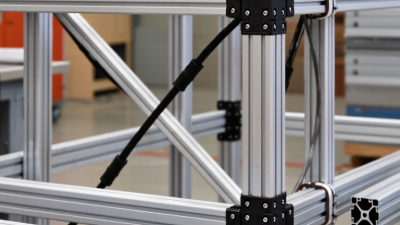
In factories, T slot profiles build safety guards, conveyor frames, workstations, and robotic cells. Commercial users apply them to display systems, partitions, lighting supports, and equipment cabinets. A reliable supplier should provide alloy certificates, dimensional inspection records, surface-finish controls, and traceable packaging. Profiles must also match real loading conditions. A frame that looks rigid may still vibrate under moving equipment. That detail is often underestimated. Cutting accuracy, corner connections, and anchoring methods deserve equal attention.

Tips: Define loads, span lengths, and operating temperatures before ordering. Request sample profiles and connection tests. Compare wall thickness, not only price. Review recycled content and production energy data, because “green” claims can be incomplete. Allow tolerance for installation errors. Perfect drawings rarely meet imperfect floors. Use corrosion-resistant finishes for humid commercial areas, but verify coating adhesion before full production.

How to Choose a Reliable China-Based Supplier

Choosing a reliable China-based extruded aluminum T-slot profile supplier requires more than comparing prices. A polished website proves little. Request the factory address, production photos, equipment list, and recent quality records. Ask whether extrusion, cutting, tapping, and packaging follow controlled procedures. An experienced supplier should explain alloy options, surface finishes, dimensional tolerances, and profile weight clearly. If answers remain vague, keep looking.

Order samples before placing a large purchase. Check slot dimensions with calipers, surface consistency under bright light, and cut squareness. Request material certificates and inspection reports for the same production batch. A dependable supplier should welcome a video audit or independent factory inspection. Also test communication by sending a drawing with several tolerances. Clear questions deserve clear answers. Small delays matter.

Discuss minimum order quantities, tooling charges, lead times, payment protection, export documents, and replacement procedures in writing. Strong suppliers use documented quality checkpoints, protective film, reinforced cartons, and moisture-conscious loading. Ask for photographs before shipment, not only after problems appear. No supplier is perfect. I would question unusually low quotes, because cheap profiles can hide alloy changes, weak anodizing, or inconsistent cuts. A trial order reveals more than promises, although one successful batch cannot prove long-term reliability. Review delivery accuracy, defect rates, and response speed before expanding the contract.

China Top Extruded Aluminum T Slot Profile Supplier - How to Choose a Reliable China-Based Supplier

Evaluation Dimension Practical Benchmark Evidence to Request Why It Matters Warning Signs
Alloy Selection 6063 is commonly selected for smooth-surface architectural and T-slot profiles; 6061 is generally preferred where higher structural strength is required. Mill certificate showing alloy designation and temper, such as 6063-T5, 6063-T6, or 6061-T6. Alloy and temper influence strength, machinability, surface quality, and corrosion performance. The supplier cannot identify the alloy or provides only a generic “aluminum” description.
Applicable Extrusion Standard The quotation and drawings should clearly reference an applicable standard, such as ASTM B221 or EN 755-9, where appropriate. Technical datasheet, dimensional-tolerance specification, and inspection report. A defined standard makes dimensional and mechanical requirements measurable and comparable. No drawing approval process or no stated tolerance standard.
Profile Accuracy Use the approved profile drawing and specify dimensional, straightness, twist, and cut-length tolerances according to the selected standard and application. First-article inspection report with calibrated measuring equipment. T-slot width, slot alignment, and profile straightness directly affect connectors, fasteners, and assembly fit. Only overall length is inspected while slot geometry and profile dimensions are ignored.
Mechanical Properties Specify minimum tensile strength, yield strength, and elongation for the selected alloy and temper rather than relying on a general alloy name. Material test certificate or laboratory report linked to the production batch. Mechanical values can vary significantly between alloy tempers and manufacturing conditions. Mechanical claims are made without alloy, temper, test method, or batch information.
Surface Finish For anodized profiles, define color, gloss, appearance limits, and coating thickness in the purchase specification. ISO 7599 may be used for anodizing requirements. Approved color sample, coating-thickness readings, and surface inspection criteria. Anodizing improves surface durability and corrosion resistance, but appearance can vary with alloy and processing. The supplier promises an exact color match without an approved reference sample or acceptance standard.
Corrosion and Environmental Compliance Request material and finish declarations relevant to the destination market, including RoHS or REACH documentation when required. Signed declarations, test reports, and coating-process records. Compliance documentation reduces import, regulatory, and application risks. Documents are undated, incomplete, unrelated to the supplied alloy, or cannot be independently verified.
Tooling and Die Capability The supplier should review wall thickness, hollow sections, slot geometry, and extrusion difficulty before confirming the die design. Die drawing, design review record, tooling quotation, and sample approval plan. Good die design improves profile consistency and reduces rework, distortion, and surface defects. A supplier accepts complex geometry immediately without checking manufacturability.
Quality Management A documented quality system, preferably certified to ISO 9001 by an accredited certification body, should cover extrusion, finishing, inspection, and corrective action. Valid certificate, scope of certification, audit status, and sample inspection records. A controlled process is more reliable than a one-time sample or verbal quality promise. The certificate is expired, outside the product scope, or cannot be verified.
Inspection and Traceability Each batch should be traceable to raw material, extrusion date, finish process, inspection results, and shipping documents. Batch number, material certificate, production record, final inspection report, and packing list. Traceability supports root-cause analysis and consistent repeat orders. Samples are available, but production lots cannot be identified or linked to test results.
Sampling and First-Article Approval Approve a representative sample before mass production, including profile fit, dimensions, finish, cut length, and packaging. Signed sample approval record and agreed procedure for changes to tooling or process. First-article approval prevents an untested production design from becoming a large-volume problem. Mass production begins before drawing, sample, and acceptance criteria are approved.
Cutting and Machining Confirm cut-length tolerance, burr control, hole location, tapping requirements, and protective-film or packaging requirements. Machining drawings, control plan, sample parts, and inspection results. Secondary processing often determines whether profiles can be assembled directly on arrival. Machining tolerances are described only as “standard” without numerical requirements.
Packaging and Transport Protection Use separators, protective film where suitable, moisture protection, reinforced bundles, and packaging that prevents bending and surface scratches. Packaging photos, packing specification, loading plan, and damage-claim procedure. Long aluminum profiles can be damaged by friction, impact, moisture, and unsupported loading. Loose profiles, mixed lengths without labels, or no protection between finished surfaces.
Commercial Transparency The quotation should separate aluminum material, die charges, finishing, machining, packaging, inspection, delivery terms, and applicable taxes or fees. Itemized quotation, payment terms, Incoterm, validity period, and change-order policy. Clear costing makes supplier comparisons more accurate and reduces unexpected charges. The lowest price excludes tooling, finishing, inspection, or shipping-related costs.
Lead Time and Capacity Require a written schedule covering drawing confirmation, die production, sampling, extrusion, finishing, machining, inspection, and dispatch. Production plan, capacity statement, milestone dates, and delay-notification procedure. A complete schedule is more useful than an unsupported single lead-time number. The supplier offers an unusually short lead time without confirming die, finishing, or machining capacity.
After-Sales and Corrective Action Agree on nonconformity reporting, response time, replacement or rework responsibility, and documentation retention before placing the order. Quality agreement, claims procedure, corrective-action template, and warranty terms. A clear remedy protects the buyer when dimensional, finish, or delivery problems occur. The supplier refuses written quality responsibilities or has no formal complaint process.

Note: Technical requirements should be finalized in the approved drawing, purchase specification, and quality agreement. Applicable standards and acceptance limits should be confirmed for the destination market and end-use application.