Top 10 Industrial Aluminium Ceiling Extrusions for Your Next Project?
When considering your next project, choosing the right materials is essential. Industrial Aluminium Ceiling Extrusions stand out for their versatility and durability. They provide a contemporary aesthetic while ensuring functionality in various environments. With their ability to support lighting fixtures and insulation, they serve multiple purposes beyond mere decoration.
The market offers an array of options, each tailored for different needs. However, selecting the best extrusion can be challenging. It requires assessing your project's specific requirements. Factors such as weight capacity, design, and finish play a critical role. Often, the most popular choices in the industry do not meet all criteria for every application.
By exploring the top 10 Industrial Aluminium Ceiling Extrusions, you gain insights into reliable products. Each extrusion showcases unique attributes that enhance architectural design. Reflecting on your project’s goals is vital. Take time to weigh aesthetics against practical needs. This balance ensures successful installation and long-term satisfaction.
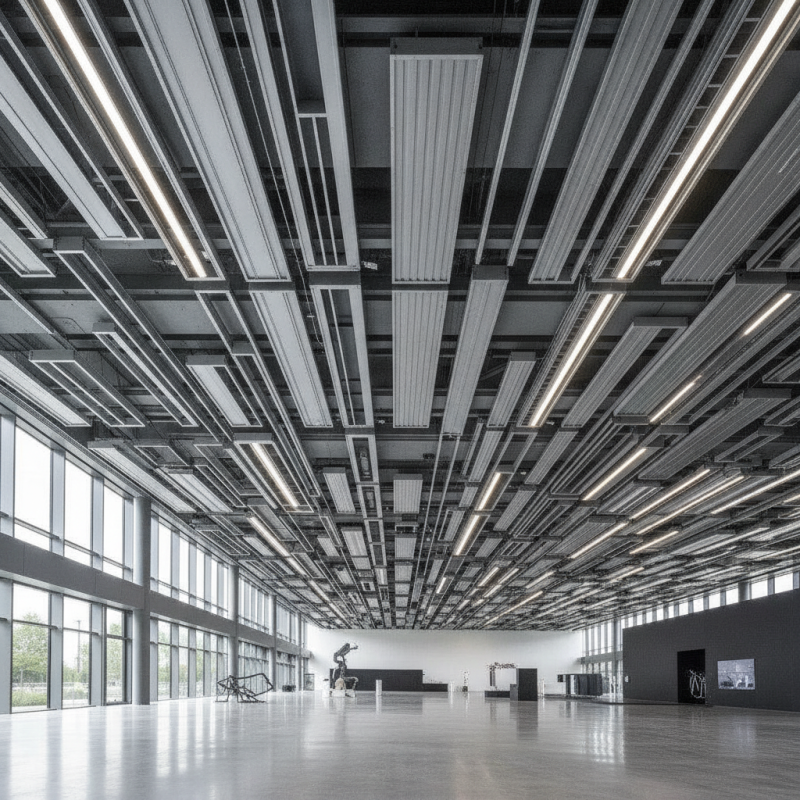
Types of Industrial Aluminium Ceiling Extrusions and Their Applications
When it comes to industrial aluminium ceiling extrusions, several types serve various applications. Lightweight extrusions are often used in commercial spaces. Their aluminum structure allows easy installation and disassembly. Soundproof ceiling extrusions reduce noise, enhancing the productivity of workplaces. These extrusions provide effective acoustic insulation for open-concept areas.
Another important type is the structural extrusion. This is essential for supporting heavy loads. They typically feature reinforced designs. These structural profiles ensure safety in industrial settings. In manufacturing, anodized aluminium extrusions offer corrosion resistance. This is vital in environments exposed to moisture or chemicals.
However, not all extrusions are perfect for every project. Engineers sometimes overlook specific requirements. This can lead to issues like inadequate load capacity. An iterative design process is crucial for successful outcomes. Always test various designs to find the best fit. Refinement is key to achieving optimal performance in ceiling installations.
Top 10 Industrial Aluminium Ceiling Extrusions for Your Next Project
| Type of Extrusion |
Dimensions (mm) |
Weight (kg/m) |
Application |
| Flat Extrusion |
50 x 10 |
1.2 |
Ceiling Panels |
| L-Shape Extrusion |
25 x 25 |
0.8 |
Corner Applications |
| T-Shape Extrusion |
30 x 15 |
1.0 |
Hanging Supports |
| U-Channel Extrusion |
40 x 20 |
1.5 |
Ceiling Grid Systems |
| Rounded Extrusion |
30 Dia |
0.9 |
Curved Ceilings |
| Z-Shape Extrusion |
30 x 15 |
1.1 |
Partition Systems |
| Drip Edge Extrusion |
20 x 30 |
0.7 |
Water Drainage |
| C-Channel Extrusion |
50 x 25 |
1.3 |
Support Structures |
| Decorative Extrusion |
20 x 20 |
0.6 |
Aesthetic Features |
| Edge Trim Extrusion |
15 x 15 |
0.5 |
Ceiling Finishing |
Key Features to Consider When Choosing Aluminium Ceiling Extrusions
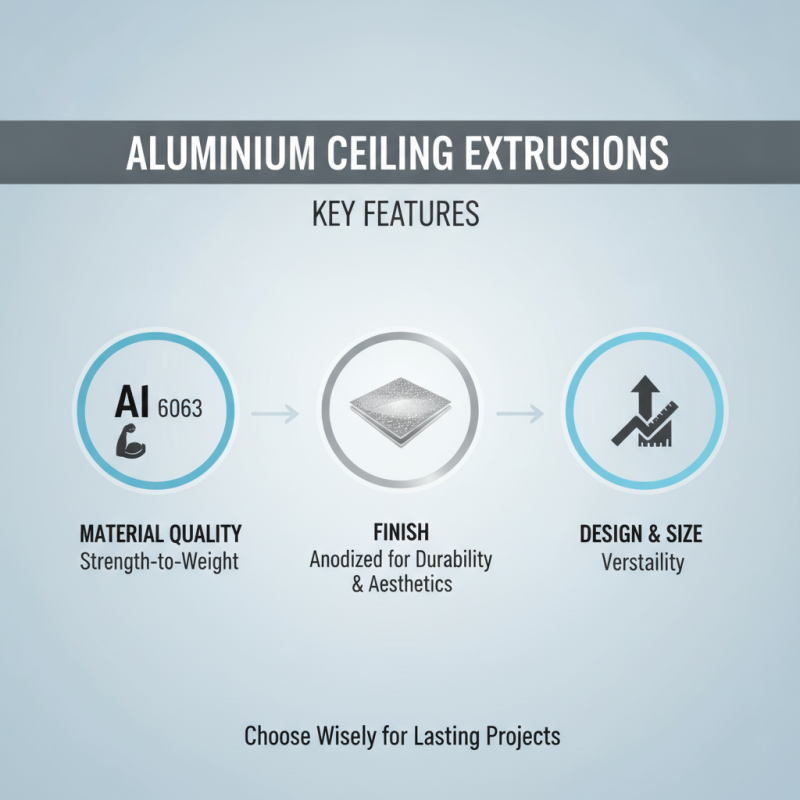
When selecting aluminium ceiling extrusions for your project, several key features are crucial. Material quality is paramount. Aluminium alloys, such as 6061 and 6063, offer excellent strength-to-weight ratios. Reports indicate that 6063 is highly regarded for its extrudability, making it a preferred choice in the industry. Pay attention to the finish as well. Anodized surfaces enhance durability and aesthetics.
Another factor to consider is the design versatility. Aluminium extrusions can be customized in numerous shapes and sizes, adapting to various architectural needs. A recent industry analysis shows that around 75% of architects prefer bespoke designs for their projects. Coupled with the ease of installation, they save both time and resources, proving more efficient than traditional materials.
Weight plays a significant role in logistics and installation. Lighter extrusions reduce structural load and simplify handling. Yet, not all lightweight options offer the necessary strength. Therefore, balancing weight and durability is essential. Regularly reviewing specifications and performance standards can reduce mistakes in material selection. This way, you ensure a successful project outcome, avoiding potential design failures.
Top 10 Aluminium Ceiling Extrusions: A Detailed Overview
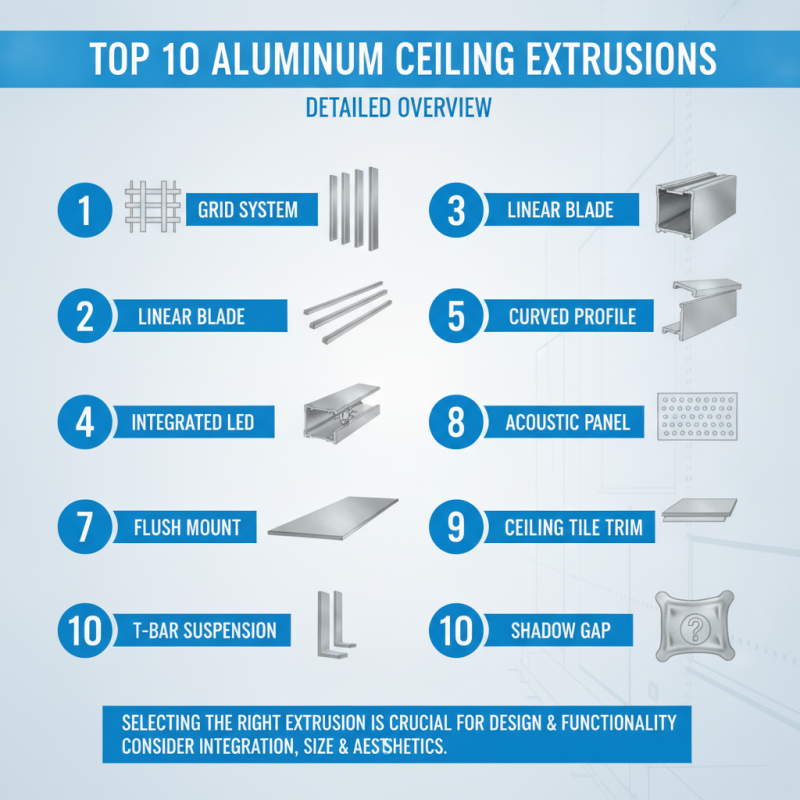
When planning your next project, selecting the right aluminium ceiling extrusions is crucial. These components come in various shapes and sizes. Each type serves a specific function, which can significantly influence the design and functionality of your space. For instance, if you need an elegant finish, look for extrusions that allow for seamless integration with lighting fixtures. Consider the dimensions carefully; the wrong size can disrupt the entire aesthetic.
It’s important to reflect on common mistakes during this selection process. Often, project managers overlook the importance of load-bearing capacity. Not all profiles can handle heavy fixtures. Additionally, think about the installation process. Some extrusions may require specialized tools or skills that can complicate the project timeline. Choosing simpler designs can often save time and ensure smooth installation.
Lastly, always pay attention to the material quality. Extrusions made from high-grade aluminium resist corrosion and wear. However, lower-quality options may seem attractive due to price but can lead to higher long-term costs. Engaging with professionals who have experience in aluminium applications can help navigate these decisions effectively. Embracing thoughtful analysis will lead to better outcomes in your project.
Installation Guidelines for Aluminium Ceiling Extrusions
When installing aluminium ceiling extrusions, attention to detail is vital. Begin by determining the correct layout for your space. Measure accurately to avoid mistakes. Each extrusion should be aligned properly for a clean finish. It's helpful to mark the installation points on the ceiling. Use a level to ensure everything is straight. A slight error in measurement can lead to uneven surfaces.
Next, prepare the surface for installation. Clean the area to remove dust and debris. This will ensure that adhesives or fasteners stick properly. Consider using spacers to keep extrusions in place as you install them. This can be especially useful in larger spaces. Always refer to installation guidelines specific to your chosen profiles.
Check for the need for additional materials. Sometimes, these extrusions may require extra support or framing. If you're new to this, seek advice from experienced installers. They can share valuable insights and tips. Even minor adjustments can lead to significant improvements in the final look. Prioritize learning through practice, as this will enhance your skills over time.
Top 10 Industrial Aluminium Ceiling Extrusions
This chart displays the popularity and application count of the top 10 industrial aluminium ceiling extrusions, based on recent project data.
Maintenance Tips for Longevity of Aluminium Ceiling Installations
Maintaining aluminium ceiling installations is essential for their longevity and performance. Regular cleaning can enhance the aesthetics and structural integrity. Dirt and grime can accumulate quickly, leading to potential corrosion. Data shows that regular cleaning can increase the lifespan of aluminium fixtures by 20%. Simple tasks, such as using a damp cloth and mild detergent, can make a significant difference.
Another crucial aspect of maintenance is inspecting for signs of wear. This includes checking for scratches or dents that may expose the underlying metal. A study in the Journal of Material Science found that minor damages can lead to major failures if left untreated. Employing a consistent inspection routine can catch issues before they escalate.
The environment also plays a vital role in the longevity of aluminium ceilings. High humidity and extreme temperatures can affect performance. It’s advisable to ensure adequate ventilation and avoid direct exposure to harsh conditions. Maintaining a controlled environment can reduce maintenance needs significantly. These considerations promote a proactive rather than reactive approach to maintenance.