Leave Your Message

10 Best Aluminium Ceiling Profile Manufacturers Worldwide?

Choosing the right Aluminium Ceiling Profile manufacturer is rarely a simple price comparison. Ceiling systems must balance strength, corrosion resistance, acoustic performance, fire requirements, and visual consistency. Small differences in alloy quality, coating thickness, and profile tolerance can become obvious under strong lighting. They may also affect installation time.

Architect Norman Foster once said, “As an architect, you design for the present, with an awareness of the past, for a future which is essentially unknown.” His observation suits ceiling materials well. A reliable profile should support today’s design needs while remaining adaptable to future repairs, lighting changes, and building upgrades. That sounds obvious. It is often overlooked.

This guide examines ten leading Aluminium Ceiling Profile manufacturers worldwide through practical criteria. These include production capability, material traceability, surface finishing, customization, certification, export experience, and after-sales support. Factory scale matters, but it does not tell the whole story. A smaller specialist may deliver better tolerances for a complex project. A large supplier may offer stronger logistics and broader testing resources.

The ranking is not absolute. Regional standards, project budgets, climate conditions, and installer skill can change the final choice. We also recognize an uncomfortable point: published product data does not always reflect long-term site performance. Therefore, buyers should request samples, technical drawings, coating specifications, and verified project references. The best manufacturer is not merely the cheapest or most famous. It is the partner whose Aluminium Ceiling Profile performs reliably above the ceiling, where mistakes are costly and rarely noticed until problems appear.
10 Best Aluminium Ceiling Profile Manufacturers Worldwide?

What Are Aluminium Ceiling Profiles and Where Are They Used?

What Are Aluminium Ceiling Profiles and Where Are They Used?

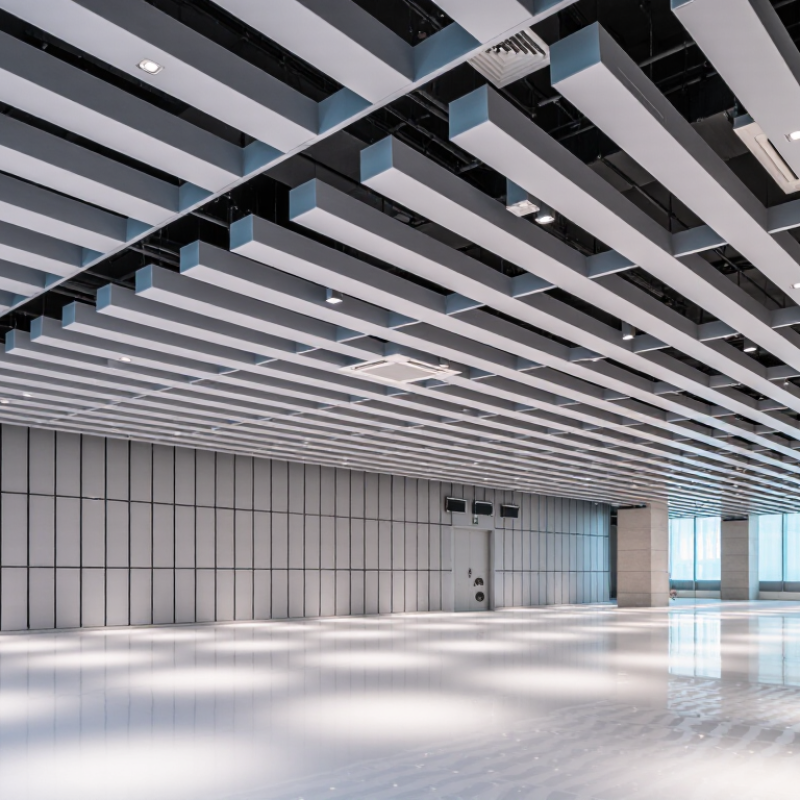
Aluminium ceiling profiles are shaped sections that support, frame, or finish ceiling systems. They may form visible borders, recessed channels, suspension tracks, or joints between panels. Manufacturers usually extrude aluminium into precise shapes, then apply anodised or powder-coated finishes. This process improves surface protection and creates consistent lines. In practice, profiles help installers maintain accurate spacing across large ceiling areas. They also hide cut edges and create cleaner transitions around lights, vents, and inspection panels.

These profiles appear in offices, hotels, airports, retail spaces, kitchens, and residential interiors. Moisture-resistant finishes can suit bathrooms and semi-outdoor areas, but coating quality still matters. Profiles are often used with mineral panels, metal ceilings, timber-look boards, and linear baffles. They can also create indirect lighting details, where a narrow channel softens LED glare along a wall. A poorly selected profile may vibrate, stain, or leave visible gaps. It is not a cure-all. Designers should check load requirements, ceiling movement, fire performance, and access needs before specifying dimensions. Site measurements are essential because walls are rarely perfectly straight. Even experienced teams sometimes underestimate expansion, fixing tolerance, or the space needed for maintenance. That small oversight can make a neat drawing difficult to install.
Aluminium Ceiling Profiles: Typical Module Widths by System Type

Aluminium ceiling profiles are lightweight structural or finishing components used to support, frame, suspend, or connect ceiling panels. Common systems include clip-in, lay-in, linear, baffle, and plank ceilings, which are widely used in offices, airports, retail spaces, healthcare facilities, hotels, and transport buildings.

The chart shows representative module widths commonly specified for each system type. Actual dimensions vary according to acoustic, fire, lighting, access, and project-design requirements.

How to Evaluate Aluminium Ceiling Profile Manufacturers

Choosing among the 10 best aluminium ceiling profile manufacturers worldwide requires more than comparing catalogues. Start with material evidence. Ask for alloy grades, temper certificates, dimensional tolerances, and coating test results. EN 13964 covers suspended ceiling systems, while ISO 9001 helps verify documented quality processes. Still, certification alone is not proof of consistent production.

Inspect physical samples under strong light. Check straightness, joint fit, edge sharpness, and coating uniformity. A profile may look excellent in a showroom but bend during installation. Request batch traceability, production capacity, moisture resistance data, and fire-performance reports. The 2023 UNEP Global Status Report states that buildings and construction produced about 37% of global energy and process-related emissions in 2022. Therefore, sustainability should be measured, not advertised. The International Aluminium Institute reports that recycled aluminium can require roughly 95% less energy than primary aluminium production. Ask for recycled-content percentages, verified environmental product declarations, and realistic transport data.

Tips: Compare three samples from different production batches. Test a cut edge. Review failure records, not only success stories. One practical warning: low price often hides thinner walls, weaker tolerances, or expensive installation delays. I would also question vague claims such as “premium alloy” without a stated grade. My own evaluation checklist is not perfect; regional standards and project conditions can change the ranking. A reliable manufacturer explains these limits clearly and provides test documents before payment or installation.

The 10 Best Aluminium Ceiling Profile Manufacturers Worldwide

The 10 Best Aluminium Ceiling Profile Manufacturers Worldwide

Choosing the ten best aluminium ceiling profile manufacturers requires more than comparing catalogues. Reliable producers control alloy quality, extrusion accuracy, coating adhesion, and batch consistency. In practice, installers notice small errors first: uneven joints, sharp edges, or profiles that twist under ceiling loads. Manufacturers with automated extrusion lines and documented quality testing usually reduce these problems.

Industry data supports this focus. Grand View Research estimates the global aluminium extrusion market will grow steadily through 2030, driven by construction and lightweight design. The International Aluminium Institute reports that buildings remain a major aluminium-use sector worldwide. These figures do not prove product quality, but they explain rising competition among profile suppliers. Strong candidates should provide alloy certificates, dimensional tolerances, fire-performance documents, and samples before large orders.

The best manufacturers also offer useful customization. They may adapt flange widths, suspension channels, perforation patterns, and powder-coating finishes for different ceiling systems. A good technical team can explain installation spacing, expansion movement, and maintenance access without hiding limitations. That matters on humid sites, where poor coating preparation can cause early discoloration. The ten best companies should also show traceable production records and stable lead times. Price alone is a weak test. No ranking is flawless. Project conditions can change the result. A small regional producer may outperform a larger exporter when technical support and replacement speed matter most.

How the Featured Manufacturers Compare by Product and Capability

How the Featured Manufacturers Compare by Product and Capability

Comparing aluminium ceiling profile manufacturers requires more than checking surface finish or catalogue size. Product breadth matters. Strong suppliers usually offer exposed, concealed, clip-in, linear, and baffle systems, with matching trims, suspension parts, and access solutions. According to the International Aluminium Institute, buildings and construction represent roughly one quarter of global aluminium use. This demand rewards manufacturers with stable alloy control and scalable production.

Capability separates experienced factories from simple traders. Look for extrusion presses, CNC cutting, powder coating, anodizing, perforation, and quality inspection under one system. The World Bank’s commodity data shows aluminium prices can change sharply across market cycles, so material purchasing and inventory planning directly affect project quotations. A supplier with local stock may outperform a cheaper exporter when deadlines are tight.

Ask for measurable evidence. ISO 9001 certification, coating thickness records, load testing, and batch traceability are useful signals. The Aluminium Association’s technical guidance also highlights alloy selection and temper as important factors in extrusion performance. Product samples should be checked under real lighting, not only in photographs. Small colour differences become obvious across a long ceiling.

Some comparisons remain imperfect. Published capacity may describe theoretical output, not available production. That distinction is easy to miss. Site visits, independent test reports, and recent project references provide stronger evidence than polished brochures. Manufacturers with design support can also adapt profiles for fire-rated assemblies, acoustic panels, curved layouts, and unusual module sizes, reducing costly adjustments during installation.

How to Choose the Right Aluminium Ceiling Profile Manufacturer

Choosing an aluminium ceiling profile manufacturer starts with the ceiling, not the catalogue. Study the project’s span, load, humidity, lighting, and installation method. A reliable producer should explain alloy selection, wall thickness, and extrusion tolerance clearly. Ask for samples. Inspect straightness, edge definition, surface uniformity, and connector fit under real site lighting. Small flaws become obvious across a large ceiling.

Request test reports for coating adhesion, corrosion resistance, dimensional accuracy, and fire performance where local rules require them. Confirm that reports match the proposed alloy and finish. Paperwork can look polished. The details matter. Experienced manufacturers should share production controls, inspection records, and traceability from billet to packed profile. They should also provide drawings, cutting guidance, replacement procedures, and practical installation support. Ask how they handle a rejected batch. A vague answer is a warning.

Compare manufacturing capacity with your schedule, but do not confuse a large factory with dependable service. Check lead times through a pilot order, then evaluate packaging after transport. Profiles may leave the line perfectly and arrive scratched or bent. Sustainability claims deserve evidence, such as recycled-content records and energy data. Site experience often shows that communication predicts results better than a low quotation. Still, technical fit must come first. No checklist is perfect; revisit assumptions after the first installation area and record what the manufacturer could improve.

10 Best Aluminium Ceiling Profile Manufacturers Worldwide? - How to Choose the Right Aluminium Ceiling Profile Manufacturer

Anonymous comparison of representative manufacturer capabilities and typical aluminium ceiling profile specifications

Profile Primary Manufacturing Region Typical Ceiling Systems Common Aluminium Alloy Typical Profile Thickness Typical Standard Length Surface Finishes Production Capability Relevant Standards Best Fit For Selection Rating
Manufacturer Profile 01 Western Europe Linear ceilings Open-cell ceilings Aluminium alloy 6063-T5 0.8–1.2 mm 3,000–6,000 mm Powder coating, anodizing, wood-effect transfer Extrusion, CNC cutting, punching, custom tooling EN 13964; EN 755; ISO 2768 Architectural projects requiring consistent appearance and custom profiles ★★★★★
Manufacturer Profile 02 East Asia Clip-in ceilings Lay-in ceilings Aluminium alloy 3003-H24 0.6–1.0 mm 600 × 600 mm panels; custom lengths available Polyester powder coating, PVDF coating, mill finish Roll forming, panel stamping, coating and packing ASTM C635; ASTM C636; EN 13964 Commercial interiors and modular suspended ceiling systems ★★★★☆
Manufacturer Profile 03 Middle East Baffle ceilings Curtain profiles Aluminium alloy 6063-T6 1.0–2.0 mm 2,500–6,000 mm Powder coating, anodized finish, metallic coating Heavy-duty extrusion and large-format finishing EN 13964; EN 755; ISO 9001 quality systems Large open spaces, transport facilities and high-temperature environments ★★★★☆
Manufacturer Profile 04 North America T-grid systems Linear metal ceilings Aluminium alloy 6063-T5 0.7–1.5 mm 1,200–3,660 mm Powder coating, anodizing, baked enamel Extrusion, roll forming, perforation and acoustic backing integration ASTM C635; ASTM C636; ASTM E1414 Office, education and acoustic ceiling applications ★★★★☆
Manufacturer Profile 05 South Asia Strip ceilings Clip-in panels Aluminium alloy 3003 or 3105 0.5–1.0 mm 600–3,000 mm Powder coating, polyester paint, printed wood finish Coil coating, roll forming, stamping and standard accessories EN 13964; ASTM C635; ISO 9001 quality systems Cost-sensitive commercial developments and standard ceiling layouts ★★★★☆
Manufacturer Profile 06 Eastern Europe Hook-on ceilings Bandraster systems Aluminium alloy 6060-T6 0.8–1.5 mm 600–3,600 mm Anodizing, powder coating, high-durability polyester finish Precision roll forming, laser cutting and suspension-system assembly EN 13964; EN 13501-1; EN 14716 Projects needing access panels, service integration and fire-performance documentation ★★★★☆
Manufacturer Profile 07 Oceania External soffits Linear ceilings Aluminium alloy 6063-T5 1.0–1.8 mm 3,000–6,000 mm PVDF coating, powder coating, anodizing Weather-resistant extrusion, perforation and concealed-fixing systems AS/NZS 3715; EN 13964; ASTM E330 Covered outdoor areas, façades and coastal environments ★★★★☆
Manufacturer Profile 08 Southeast Asia Metal ceilings Acoustic baffles Aluminium alloy 3003-H14 0.6–1.2 mm 600 × 600 mm panels; 2,000–4,000 mm baffles Powder coating, polyester coating, perforated finish Panel forming, perforation, acoustic fleece application and assembly EN 13964; EN ISO 354; ASTM C423 Retail, hospitality and interiors requiring sound absorption ★★★★☆
Manufacturer Profile 09 Latin America Lay-in systems Linear panels Aluminium alloy 3003 or 6063 0.7–1.2 mm 600–3,000 mm Powder coating, baked paint, mill finish Standard extrusion, panel forming and regional project supply ASTM C635; ASTM C636; EN 13964 Regional construction projects using standard sizes and short supply routes ★★★☆☆
Manufacturer Profile 10 East Asia Custom profiles LED-integrated ceilings Aluminium alloy 6063-T5 0.8–2.0 mm 1,000–6,000 mm Anodizing, powder coating, PVDF and brushed finish Rapid prototyping, custom dies, CNC machining and lighting integration EN 13964; EN 755; IEC 60598 for integrated lighting components Retail, transportation and bespoke ceiling designs with integrated lighting ★★★★★
How to choose: Confirm alloy grade, temper, profile tolerance, corrosion resistance, coating thickness, fire classification, acoustic performance, loading capacity, sample approval, tooling ownership, minimum order quantity and documented compliance before placing an order. Dimensions and performance ranges shown above are representative market specifications and should be verified against the manufacturer’s current technical datasheets and project requirements.