How to Choose the Right Aluminum Angle Slat?
Choosing the right Aluminum Angle Slat starts with understanding where it will be used. A profile suited to a sheltered ceiling may not perform as well on an exposed façade or in a humid area. Before comparing finishes, note the installation location, expected exposure, support spacing, and the appearance you want. A quick sketch with measured spans can prevent a costly mismatch later.
Dimensions matter in practical ways. The angle, leg lengths, wall thickness, and slat spacing affect how the assembly looks and fits. For example, a narrow angle may create a light, open screen, while a deeper profile can produce stronger visual lines. But appearance alone is not enough. Ask the supplier for material specifications, finish details, available tolerances, and installation guidance. If the slats will carry loads or span a significant distance, have a qualified professional confirm that the proposed system suits the project. Aluminum performance depends on the alloy, temper, profile, and conditions—not just the product name.
Small details count. Check how end cuts, corners, fasteners, and drainage will be handled before ordering. Request a sample when color or texture is important; a finish can look different under direct sun than it does indoors. Supplier terminology is not always consistent, either. That can be confusing. Compare drawings and specifications, not labels alone. Some choices remain a judgment call, especially when balancing cost, appearance, and durability. A careful review will not remove every uncertainty, but it can make the final selection more informed and easier to install.
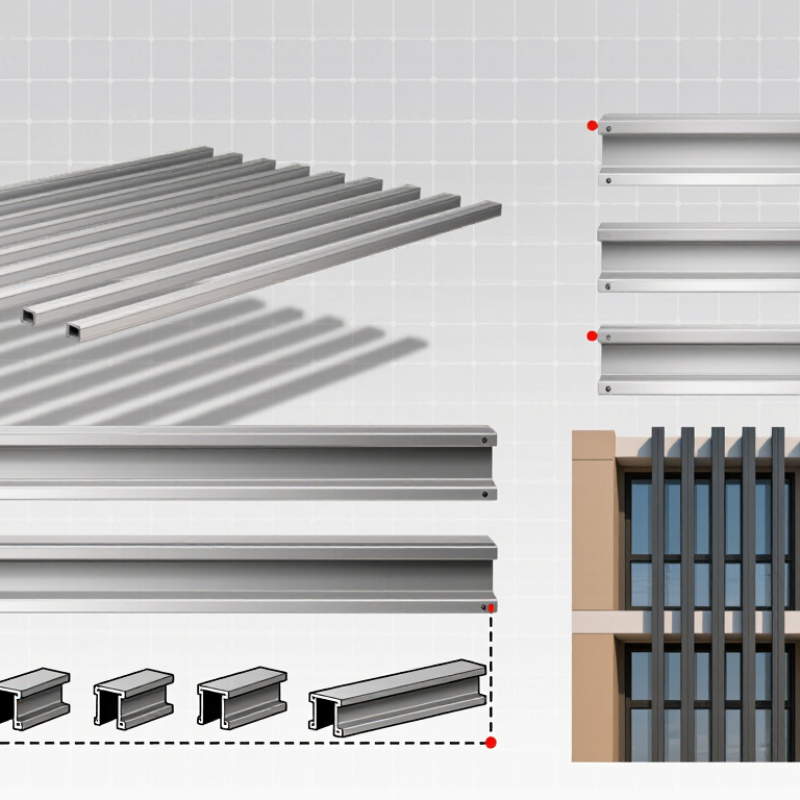
Identify the Purpose and Operating Conditions
Before choosing an aluminum angle slat, define its job. Is it meant to guide airflow, screen a view, or add a protective edge? The answer affects the angle, spacing, and required stiffness. A ventilation screen, for example, needs enough open area for air to pass without creating an unwanted sightline. A decorative divider may prioritize appearance instead. Write down the main purpose and any secondary needs before comparing dimensions.
Next, consider the actual operating conditions. Note whether the slat will sit indoors or outdoors, face direct rain, or experience frequent cleaning. Measure the available depth and check how the slats will attach to their frame. These details influence fit and maintenance. A compact installation might call for a narrower profile, while a long span may need more support. Avoid choosing from a drawing alone; site measurements can reveal obstructions or uneven surfaces. It is easy to assume conditions are uniform, but they often are not.
Tips: Record opening size, airflow needs, exposure, and cleaning frequency. Ask the installer to confirm clearances. If one requirement is uncertain, measure again before ordering. A small delay is better than a slat that blocks access or needs trimming.
Determine the Required Slat Dimensions and Load Capacity
Choose dimensions from the actual load path, not appearance alone. Record each leg length, wall thickness, unsupported span, and support spacing. A 25 mm leg with a 2 mm wall behaves differently from a 40 mm leg with the same thickness. Small details matter. Note whether the slat carries a point load, a distributed load, or repeated movement; each can produce different bending and deflection. Check the connection too. A strong angle can still twist or pull away at a weak fastener.
The Aluminum Association’s 2020 Aluminum Design Manual lists a minimum yield strength of 35 ksi for common 6061-T6 extruded shapes, subject to product form and thickness. That value is not a safe working-load rating. Use the alloy’s certified properties and the section’s dimensions to calculate bending stress and deflection across the real span, then verify the supports and fasteners.
For a long, thin slat, deflection may govern before the material reaches yield. A common design miss is treating a short sample as proof of full-span performance. It isn’t. Check the supplier’s dimensional tolerances, and test a representative assembly when loads or support conditions remain uncertain.
Choose an Aluminum Alloy and Surface Finish
For an aluminum angle slat, match the alloy to the load and the finish to the exposure. Alloy 6063 is widely used for architectural extrusions, offering good formability and a smooth surface for finishing. Choose 6061 when greater strength matters, though its appearance after extrusion may be less uniform. Check the supplier’s temper and mechanical-property data; alloy number alone does not tell the whole story. Small differences matter.
For indoor use, a clear or colored anodized finish can keep the metal’s texture visible. Powder coating offers more color choices and can help protect exposed surfaces, but inspect cut ends and drilled holes, where protection may be incomplete. Near salt spray or persistent moisture, ask for finish test data suited to that environment, not just a “durable” label.
The International Aluminium Institute reports that recycling aluminum uses about 95% less energy than producing primary aluminum, so recycled content may also inform your selection (International Aluminium Institute, Aluminium Recycling Fact Sheet). I would request a sample and check its edges under real lighting. Catalog photos can flatter a finish.
Compare Angle Profiles, Mounting Methods, and Compatibility
Start by comparing the profile, not just the visible face. A narrow angle leaves more open space, while a deeper leg can stiffen a long span. Check both leg widths, wall thickness, corner radius, and cut length against the drawing. Small details matter.
Mounting choice changes the fit. Screws through one leg are straightforward on a solid frame, but they need sound backing and careful spacing. Clips or a channel can hide fasteners and allow cleaner removal; they also add depth. Before ordering, measure the available clearance at brackets, corners, and moving parts. A paper template helps. Dry-fit one piece if possible.
Compatibility deserves more than a quick visual check. Compare the slat’s angle and dimensions with the existing carrier, slot, or mating surface, then confirm material thickness and fastener reach. Aluminum profiles can vary slightly, so a nominal size may not tell the whole story. I would verify one sample before committing to a full run; skipping that step can be tempting when the sketch looks exact. It often is not.
Check Quality Standards, Durability, and Maintenance Needs
A dependable aluminum angle slat should meet a documented material specification, not just look straight on delivery. For extruded profiles, ask whether the alloy and temper conform to ASTM B221, which covers aluminum-alloy extruded bars, rods, wire, profiles, and tubes. Request a mill certificate and check dimensions, wall thickness, and finish against the project requirements. Small variations matter: uneven legs can leave visible gaps or make neighboring slats sit out of line.
The coating matters, too. Confirm its type, thickness, and applicable performance standard, then inspect cut edges and corners for thin or damaged coverage.
The International Aluminium Institute estimates that about 75% of all aluminum ever produced remains in use, reflecting the material’s potential for long service and recycling. That figure is not a service-life guarantee for any slat. Exposure, alloy, coating, and installation all affect durability.
Salt and grime collect in corners. Rinse them away with fresh water and mild detergent, then inspect joints and fasteners for trapped moisture or coating damage. Maintenance guidance should match the site; a sheltered interior and a coastal façade do not age alike. I would not rely on “maintenance-free” claims without clear cleaning instructions and traceable test documentation.