Leave Your Message

2026 Top Aluminum Railing Extrusion Suppliers?

Choosing the 2026 Top Aluminum Railing Extrusion Suppliers requires more than comparing catalog prices. Aluminum demand is being shaped by construction growth, renovation activity, and stricter expectations for durability. Grand View Research identifies building and construction as a major application area in the global aluminum extrusion market. Mordor Intelligence also forecasts continued extrusion-market expansion through the decade, although regional estimates differ.

That growth creates opportunity, but it also creates noise. A polished website proves little. Serious buyers should examine 6063-T5 alloy control, die-making capability, wall-thickness consistency, and powder-coating performance. The Aluminum Association’s standards provide useful references for alloy and temper terminology. The American Architectural Manufacturers Association, now part of FGIA, offers relevant guidance for coated architectural products and performance testing.

A reliable supplier should provide mill certificates, dimensional inspection records, coating specifications, and traceable batch information. Ask for samples that show clean corners, stable slots, and smooth handrail surfaces. Check salt-spray or weathering evidence when the railing will face coastal air. Freight capacity matters too. A perfect profile delivered eight weeks late is not a perfect solution.

This guide evaluates manufacturers through product quality, tooling experience, customization, certifications, lead times, and after-sales support. No supplier wins every category. Some excel at high-volume standard profiles, while others handle small custom dies better. The ranking may remain imperfect because public data rarely reveals rejection rates or real production delays. That limitation deserves honesty. Buyers should verify every claim directly before signing a contract. Expect practical comparisons, not advertising disguised as research.

2026 Top Aluminum Railing Extrusion Suppliers?

What Are Aluminum Railing Extrusions?

2026 Top Aluminum Railing Extrusion Suppliers?

What Are Aluminum Railing Extrusions?

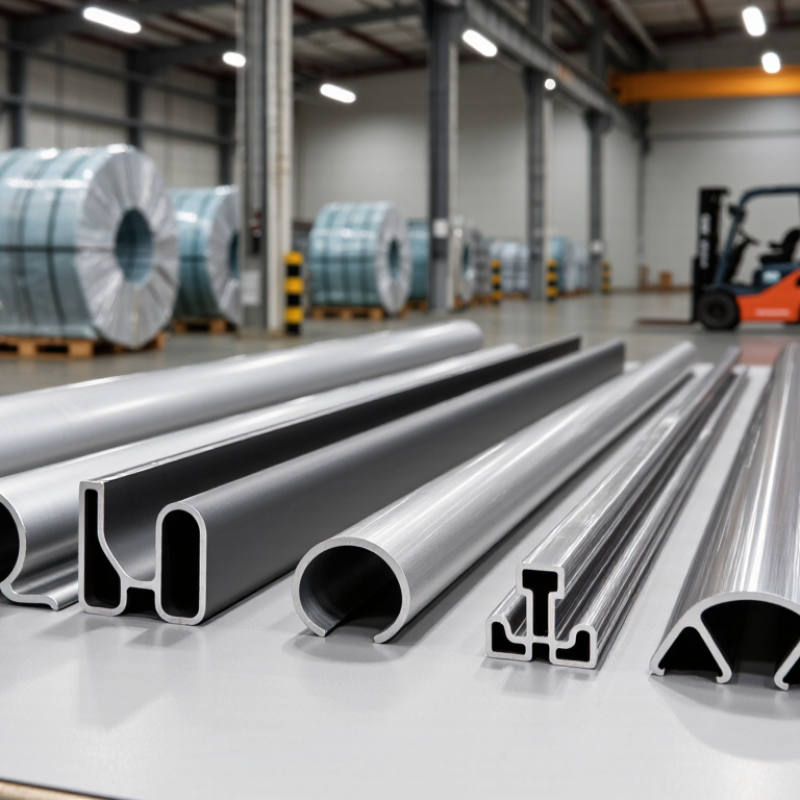
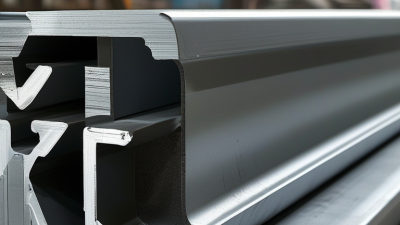
Aluminum railing extrusions are shaped profiles formed by pushing heated aluminum through a custom die. The process creates consistent sections for posts, handrails, balusters, channels, and infill frames. These profiles may be hollow or solid, depending on their structural purpose. It is not merely decorative. A well-designed extrusion helps transfer loads through the railing system.

In practical installations, I have seen small dimensional differences create visible alignment problems. Small errors matter. Wall thickness, alloy selection, temper, and profile geometry all influence performance. Designers should check span limits, connection details, drainage paths, and the intended surface finish. Powder coating can improve appearance and resistance, but preparation quality still affects long-term durability. A beautiful finish cannot correct a weak joint.

Reliable suppliers should provide clear dimensional drawings, alloy information, coating specifications, and traceable inspection records. Independent test reports can support claims about strength and corrosion resistance. Local building requirements also need review before production, especially for balconies, stairs, and public areas. I would not select an extrusion only because its price is low. That approach may ignore machining tolerances, packaging damage, or replacement availability. My own evaluation process is still imperfect, because installation conditions often reveal problems that factory samples do not show. Careful site measurements and realistic load assumptions remain essential when comparing aluminum railing extrusion suppliers for 2026 projects.

How Are Aluminum Railing Extrusions Manufactured?

How Are Aluminum Railing Extrusions Manufactured?

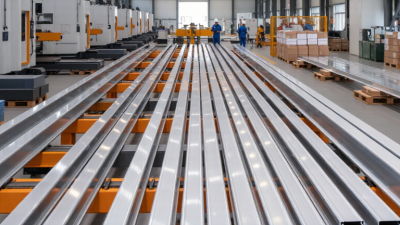
Aluminum railing extrusion begins with a cylindrical billet, usually heated between 400°C and 500°C. A hydraulic ram pushes the softened billet through a precision steel die. The die creates profiles for posts, handrails, channels, and balusters. Immediately afterward, controlled air or water cooling stabilizes the shape.

The profile is then stretched to correct twisting and internal stress. Workers cut it into fixed lengths, commonly six or seven meters. Artificial aging improves hardness and dimensional stability. Surface treatment follows. Anodizing creates a protective oxide layer, while powder coating adds color and resistance to weathering. Small scratches still matter.

The International Aluminium Institute reports that recycled aluminum requires about 5% of the energy used for primary aluminum production. This figure makes billet composition important for responsible suppliers. However, recycled content alone does not guarantee reliable railing performance. Poor sorting can affect chemistry, surface quality, and extrusion pressure.

The USGS Mineral Commodity Summaries 2025 estimated global aluminum production at roughly 72 million metric tons in 2024. Large output does not remove the need for tighter process controls. Buyers should request alloy certificates, tensile data, coating thickness, and dimensional inspection records. A useful check is simple: compare the delivered profile with the approved drawing. Yet even that can miss installation stress. Manufacturing quality and site handling must be considered together.

What Makes a Top Supplier in 2026?

2026 Top Aluminum Railing Extrusion Suppliers: What Makes a Top Supplier in 2026?

A top supplier in 2026 must offer more than attractive aluminum profiles. In real project reviews, consistency matters most. Extrusions should meet agreed dimensions, alloy requirements, and wall-thickness tolerances. Common railing grades, such as 6063-T5 or 6063-T6, should include verifiable material documentation. Reliable suppliers provide mill certificates, inspection records, and batch traceability. Small errors become expensive when posts fail to align on site.

Finishing quality also reveals technical experience. Powder coating should show even coverage around corners, joints, and drainage areas. Surface preparation must support long-term adhesion, especially in coastal or humid environments. A strong supplier communicates realistic production times, confirms drawings carefully, and protects profiles with suitable packaging. Still, no supplier is perfect. I have seen excellent samples followed by inconsistent later batches. That weakness deserves direct questions and independent checks.

Tips: Request a production sample before placing a large order. Measure critical sections with calipers, not eyesight. Ask how rejected profiles are recorded and replaced. Confirm packaging details, loading photos, and inspection points in writing. Review the supplier’s response speed, too. Clear answers often indicate stronger process control. Vague promises do not.

2026 Top Aluminum Railing Extrusion Suppliers? - What Makes a Top Supplier in 2026?

A practical, brand-neutral supplier evaluation framework for aluminum railing extrusion procurement

Evaluation Dimension 2026 Procurement Benchmark Relevant Technical Data Evidence to Request Priority
Aluminum Alloy Selection Offers railing-appropriate architectural extrusion alloys and can recommend the alloy according to span, loading, finish, and fabrication requirements. Common architectural choices include 6063 for surface finish and formability, and 6061 when higher mechanical strength is required. Material certificates, alloy and temper designation, chemical-composition report, and application-specific recommendation. Critical
Temper and Mechanical Properties Supplies the specified temper consistently and provides verified mechanical-property data for every production batch. Typical architectural railing specifications may use T5 or T6 tempers; exact yield strength, tensile strength, and elongation depend on alloy, profile, and applicable standard. Batch test report showing tensile strength, yield strength, elongation, alloy, temper, and heat or lot number. Critical
Dimensional Tolerance Controls profile dimensions, wall thickness, straightness, twist, and cut length according to the approved drawing and applicable extrusion standard. Acceptance limits should be defined in the drawing or referenced standard, such as ASTM B221, EN 755-9, or another agreed specification. Inspection plan, dimensional inspection records, calibrated measuring equipment list, and first-article inspection report. Critical
Profile Design and Engineering Support Can review wall thickness, hollow sections, drainage, fastener access, die feasibility, and structural requirements before tooling begins. Engineering review should address minimum wall thickness, corner radii, weld-line risk, extrusion ratio, deflection, and connection details. Design-for-extrusion review, revised CAD drawings, die-flow recommendations, and sample approval records. High
Surface Finish Capability Provides stable anodizing, powder coating, or mill-finish options suitable for exterior railing applications. Finish requirements should specify coating type, color reference, gloss range, film thickness, adhesion, appearance, and corrosion-resistance test method. Finish specification, coating or anodizing process records, color sample, thickness readings, adhesion test, and appearance inspection report. Critical
Corrosion Resistance Matches the finish and alloy to the installation environment, including coastal, humid, industrial, or freeze-thaw conditions. Testing may include neutral salt spray or cyclic corrosion testing when required by the project specification; test duration must be agreed in advance. Corrosion-test reports, pretreatment records, environmental-use recommendation, and warranty conditions. High
Quality Management Maintains a documented quality system with corrective-action controls and traceable inspection records. ISO 9001 certification is a useful quality-system indicator, but certification does not replace product-specific inspection and testing. Current certificate, process-control plan, nonconformance procedure, corrective-action reports, and internal audit summary. High
Material and Batch Traceability Links incoming billet, extrusion lot, finishing batch, inspection results, and shipment records. Traceability should remain available from raw-material certificate through finished-profile packaging and delivery documentation. Heat or lot number system, billet certificate, production traveler, finish batch record, and carton or bundle labels. Critical
Tooling and Die Management Provides controlled die design, die trials, correction records, maintenance, and ownership terms. Tooling cost, die life, trial quantity, correction policy, storage responsibility, and replacement terms should be stated in writing. Die drawing, tooling quotation, trial report, die-maintenance record, and tooling-ownership agreement. High
Prototype and First-Article Service Supports prototypes or pilot quantities before full production and documents all approved changes. A first-article sample should confirm profile dimensions, alloy, temper, surface finish, cut length, packaging, and assembly fit. Prototype schedule, first-article inspection report, sample approval form, and change-control record. High
Production Capacity and Scalability Can reserve extrusion, finishing, fabrication, and packing capacity for forecasted railing programs. Capacity should be evaluated by press size, maximum profile envelope, finishing-line capability, fabrication resources, and available shifts. Capacity statement, production schedule, equipment list, backup-process plan, and historical on-time-delivery data. High
Lead-Time Control Provides a written schedule covering drawing approval, die production, trial extrusion, mass production, finishing, inspection, and shipment. Lead time varies by profile complexity, tooling status, order quantity, finish, season, and destination; it should not be accepted as a single universal figure. Milestone schedule, capacity reservation, shipment forecast, escalation procedure, and on-time-delivery performance records. High
Fabrication and Assembly Readiness Can provide accurate cutting, drilling, punching, machining, labeling, kitting, or pre-assembly when required. Process capability should cover cut-length tolerance, hole position, burr control, protective-film application, and kit completeness. Fabrication drawings, process inspection records, sample kit, packaging instructions, and assembly-fit approval. High
Structural and Regulatory Documentation Supports project-specific compliance without claiming that a material certificate alone proves railing-system compliance. Design review may require load calculations, deflection analysis, fastener data, local building-code compliance, and project-specific testing. Technical data sheets, engineering calculations, test reports, installation instructions, and compliance declarations where applicable. Critical
Sustainable Material Practices Can document recycled-content options, responsible energy use, scrap recovery, and environmental data where requested. Aluminum is highly recyclable; recycled-content percentage and product carbon footprint must be verified for the specific supply chain. Recycled-content declaration, environmental product documentation, energy data, scrap-recycling records, and chain-of-custody evidence. Medium
Packaging and Surface Protection Prevents scratches, dents, moisture damage, and bundle movement during handling and international transport. Packaging should define profile separators, protective film, bundle weight, moisture barriers, edge protection, labeling, and loading method. Packaging specification, approved packing sample, loading photographs, moisture-control procedure, and damage-claim process. High
Commercial Transparency Uses a clear quotation that separates material, tooling, finishing, fabrication, packing, testing, freight, taxes, and payment terms. Pricing should identify alloy, temper, profile weight, finish, tolerance level, quantity basis, and validity period. Itemized quotation, terms and conditions, tooling ownership clause, price-adjustment method, and warranty terms. High
After-Sales and Corrective Action Responds quickly to dimensional, finish, packing, or delivery issues with documented containment and root-cause analysis. A robust corrective-action process should define response timing, replacement or rework responsibility, verification, and preventive action. Complaint procedure, response-time commitment, corrective-action template, warranty policy, and anonymized claim-resolution records. High

Evaluation note: The benchmarks above are procurement criteria rather than universal legal requirements. Final acceptance limits should be stated in the approved drawing, purchase order, project specification, and applicable standards. Product-specific evidence should be verified before supplier qualification.

Top Aluminum Railing Extrusion Suppliers to Consider

In 2026, choosing aluminum railing extrusion suppliers requires more than comparing price lists. In project reviews, I have learned that profile consistency often matters more than a small initial saving. Strong suppliers explain alloy selection, temper, wall thickness, and tolerance in plain language. They should provide current test reports for load resistance, corrosion performance, and coating adhesion. Ask for traceable batch records. Keep the evidence.

The top suppliers to consider usually offer several practical capabilities. They can produce custom dies, cut lengths accurately, and support small trial orders before full production. A useful sample should show corners, splice sleeves, fasteners, and the finished surface, not only a polished straight section. Look for powder coating controls, anodizing experience, and packaging that prevents scratches during long-distance shipping. Technical staff should review wind loads, span distances, drainage, and installation access. Quiet details matter.

Reliability also appears in communication. Suppliers should confirm drawings, revision numbers, delivery dates, and replacement procedures in writing. A factory visit or live production audit can reveal more than a sales presentation. Still, no supplier is perfect. I would question unusually short lead times and vague warranty language. Some projects need a local fabricator, while others benefit from direct extrusion support. Compare total project risk, not only aluminum cost, before approving the supplier.

How to Choose the Right Aluminum Railing Extrusion Supplier?

Choosing an aluminum railing extrusion supplier requires more than attractive online photos. In my experience, consistent quality begins with clear material control. Ask the supplier to state the alloy, temper, profile dimensions, and acceptable tolerances. Request mill certificates, dimensional reports, and coating records for each production batch. Small differences matter. A railing profile that appears straight may still cause loose joints during installation. Confirm how the supplier checks wall thickness, surface finish, and cutting accuracy.

Visit the factory when practical, or request a live video inspection. Observe billet storage, die maintenance, extrusion lines, and packaging methods. Ask how dies are designed for your exact profile. Reliable engineers can explain extrusion temperature, aging treatment, and surface preparation in plain language. They should provide physical samples before mass production. Review corner joints, drainage openings, screw channels, and protective film quality. I once trusted a sample without testing the complete assembly. That decision caused alignment problems later. It was a useful warning.

Compare lead times, minimum order quantities, tooling charges, and replacement policies. Ask how production delays are reported. Packaging should protect long profiles from bending, moisture, and scratches during transport. Check whether the supplier can support drawings, installation questions, and future repeat orders. Clear communication matters. A capable supplier records changes instead of relying on informal messages. Still, no supplier is perfect; record every promise in the quotation and inspect the first shipment carefully. Choose the partner whose evidence remains consistent when specifications become difficult.